When selecting an insulating lining for winter apparel, warmth is only one part of the design equation. Garment manufacturers also need to consider thickness, drape, flexibility, weight, and how easily the finished garment allows the wearer to move. Cotton batting has long been used as a natural insulating layer, while newer materials such as Y-Warm take a different structural approach to thermal insulation. Understanding how these materials behave can help apparel brands choose an appropriate solution for different garment designs.
How Does Cotton Batting Affect Garment Drape?
Cotton batting generally provides warmth through a fibrous, lofted structure, with the thickness and density of the batting influencing the final garment’s hand and appearance. Cotton batting products are available in different lofts, from relatively thin layers to thicker constructions designed to provide greater warmth and volume. Product references describe cotton batting as soft and drapable, making it suitable for quilts and wearable products.
For apparel, however, adding more batting to increase insulation can also increase the thickness of the garment. A thicker insulating layer may create a fuller silhouette and affect how fabric folds around areas such as the shoulders, elbows, waist, and sleeves. The effect depends on the particular batting construction, so cotton batting should not be considered inherently stiff or restrictive. In fact, low-loft cotton can offer a relatively soft and natural drape. The key consideration is that increasing loft generally adds more physical volume to the garment.
This becomes more noticeable in fitted winter clothing or products designed for active use. When a garment needs to maintain warmth while preserving a relatively close fit, designers have to balance insulation thickness against the desired movement and appearance.
Y-Warm Insulating Lining Takes a Different Approach
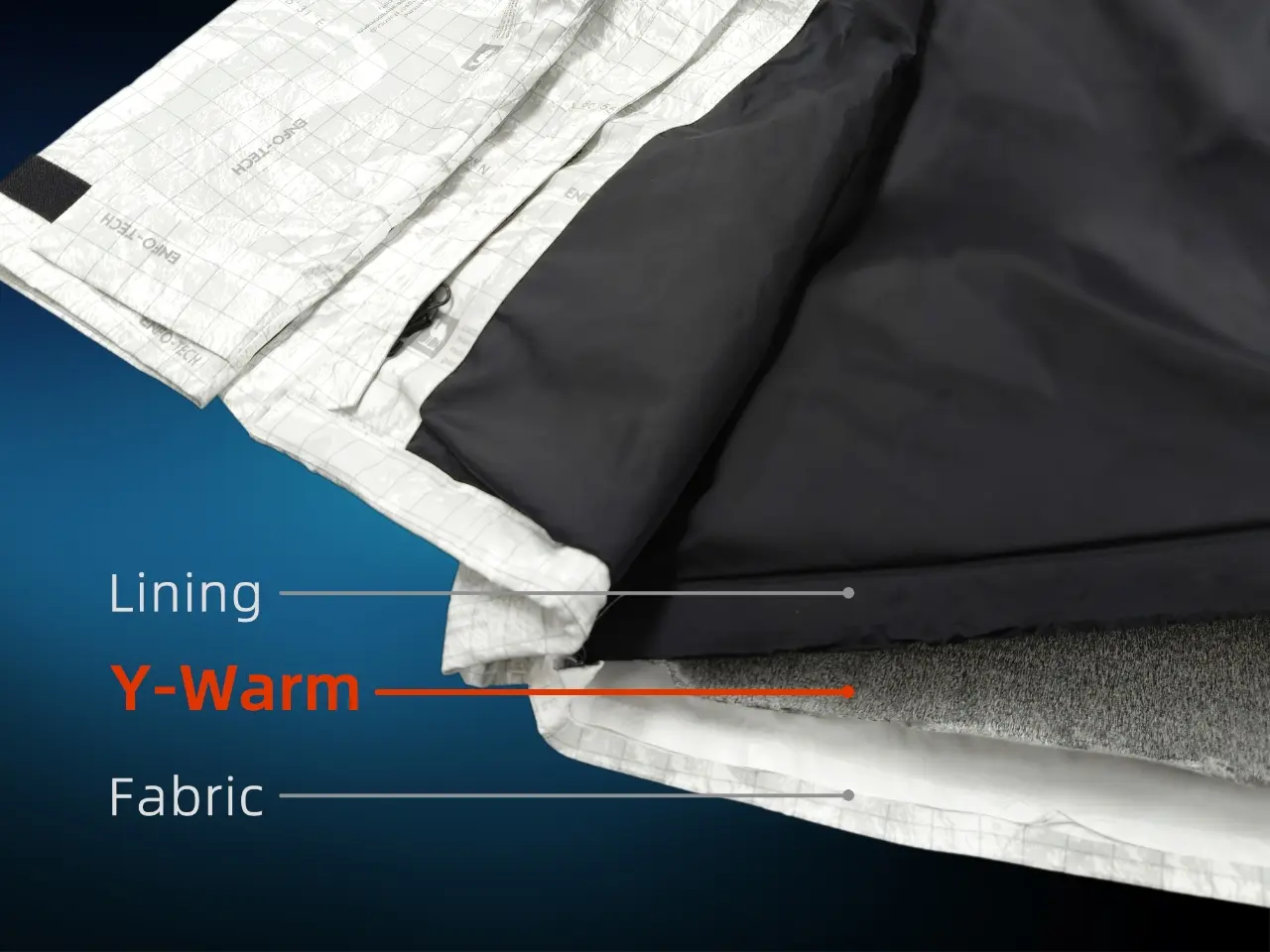
Y-Warm is designed around an ultra-thin thermal insulation structure rather than relying primarily on conventional bulk. According to Y-Warm, its YW-01 material has a thickness of just 0.7 mm and can provide an approximately 10°C thermal insulation effect under specified conditions. The material is designed to be placed between the outer fabric and lining as an insulating layer.
Its internal structure is also fundamentally different from conventional fibrous batting. Y-Warm describes the material as having a nano-scale closed-cell structure, with pore walls approximately 20–280 nanometers thick and pore diameters around 30–190 micrometers. The structure is intended to reduce heat transfer while maintaining a flexible form suitable for textile applications.
For garment designers, the practical significance is the ability to introduce thermal insulation without automatically creating a thick, high-loft layer. Y-Warm’s clothing application page recommends using it between the outer fabric and lining for lightweight jackets, while additional fill materials can be combined with Y-Warm for winter or extreme-cold applications.
Insulating Lining and Freedom of Movement
Freedom of movement is particularly important in workwear, outdoor apparel, sports-oriented clothing, and fitted winter jackets. The insulation itself is not the only factor that determines mobility; garment patterning, shell fabric, quilting, construction, and overall thickness also contribute. Nevertheless, reducing unnecessary bulk can give designers more flexibility when developing a garment’s structure.
This is where the difference between conventional loft-based insulation and an ultra-thin insulating lining becomes relevant. Cotton batting can be selected in lower lofts when a flatter profile is desired, and low-loft cotton remains a practical choice where natural fiber characteristics and traditional drape are priorities.
Y-Warm, by contrast, is specifically designed to provide insulation in a thin layer. Its official guidance states that Y-Warm has limited stretch in the warp and weft directions, while bias cutting can provide greater elasticity when stretch is required. This gives apparel manufacturers another construction option when working around curved or movement-sensitive garment areas.
Designers should also pay attention to how the material is quilted. Y-Warm notes that overly dense quilting can increase stiffness and reduce softness. This means that achieving freedom of movement is not simply a matter of selecting the thinnest insulation; the construction method needs to preserve the material’s intended characteristics.
Which Material Is Better for Lightweight Winter Apparel?
The right choice depends on the garment’s priorities. Cotton batting remains useful when a soft, natural, drapable insulation layer and traditional textile feel are important. Different cotton batting constructions can also provide different levels of loft, warmth, and drape.
Y-Warm is more focused on situations where thermal insulation needs to be integrated into a lightweight, low-profile garment. Its YW-01 material is only 0.7 mm thick, while the company also offers other Y-Warm material grades designed for different application priorities, including enhanced thermal insulation, localized softness, enhanced strength, and flame-retardant performance.
For apparel brands developing lightweight winter jackets, workwear, outdoor clothing, or other products where insulation thickness can influence fit and mobility, comparing the complete garment construction—not simply the insulation material in isolation—is essential.
About Y-Warm
Y-Warm Technologies Co., Ltd. specializes in the research, development, and industrialization of metamaterials. Their proprietary Y-Warm™ is a flexible thermal insulation material developed for applications including apparel, outdoor gear, automotive, and construction. With an ultra-thin structure and multiple material grades, they provide insulation options for product designers seeking to balance thermal performance with weight, flexibility, and garment construction requirements.
Apparel manufacturers exploring thinner insulation solutions can learn more about Y-Warm’s clothing applications and material options on the company’s official website.
