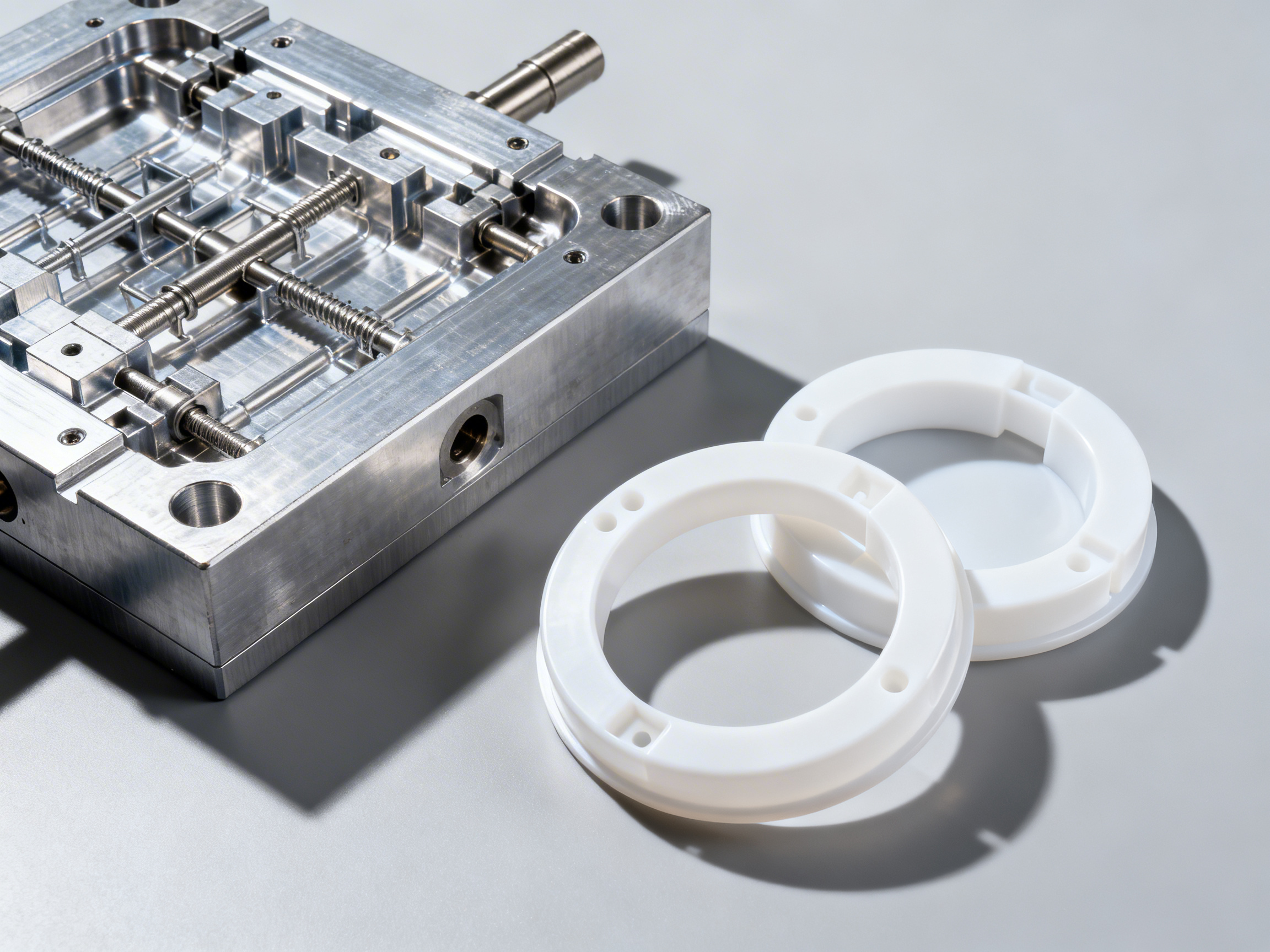
In the competitive landscape of medical device and automotive manufacturing, the transition from design validation to mass production often represents a perilous “Valley of Death.” Engineers and procurement directors frequently face a critical bottleneck: the long lead times associated with hardened steel production molds, which can delay market entry by months. Rapid tooling serves as the definitive strategic bridge in this scenario. By leveraging advanced tooling technologies to produce injection-molded parts with production-grade materials, manufacturers can secure their supply chains and ensure immediate market availability.
Strategic Deployment of Bridge Molds in Supply Chains
Bridge tooling is not merely a stopgap; it is a calculated financial and operational strategy designed to maintain momentum during the ramp-up phase. By implementing this approach, OEMs can bypass the inertia of traditional tooling procurement.
Economic and Time-to-Market Justification
The financial argument for bridge tooling centers on the Total Cost of Ownership (TCO) relative to speed. Traditional production molds, typically crafted from hardened H13 steel, require 12 to 16 weeks for fabrication and conditioning. In contrast, rapid tooling solutions utilize high-grade aluminum or pre-hardened steels to deliver functional tools in as little as 7 to 15 days.
Data from recent manufacturing case studies indicates that bridge tooling can reduce initial lead times by up to 75%. For a consumer electronics launch, this acceleration allows companies to capture early market share, generating revenue while the permanent steel tools are still being machined. Furthermore, the cost of a bridge tool is often 40% to 60% lower than a production mold. This allows procurement teams to amortize tooling costs across low-volume runs, mitigating the financial risk if a product design requires early post-launch iteration.
Ensuring Quality and Regulatory Compliance
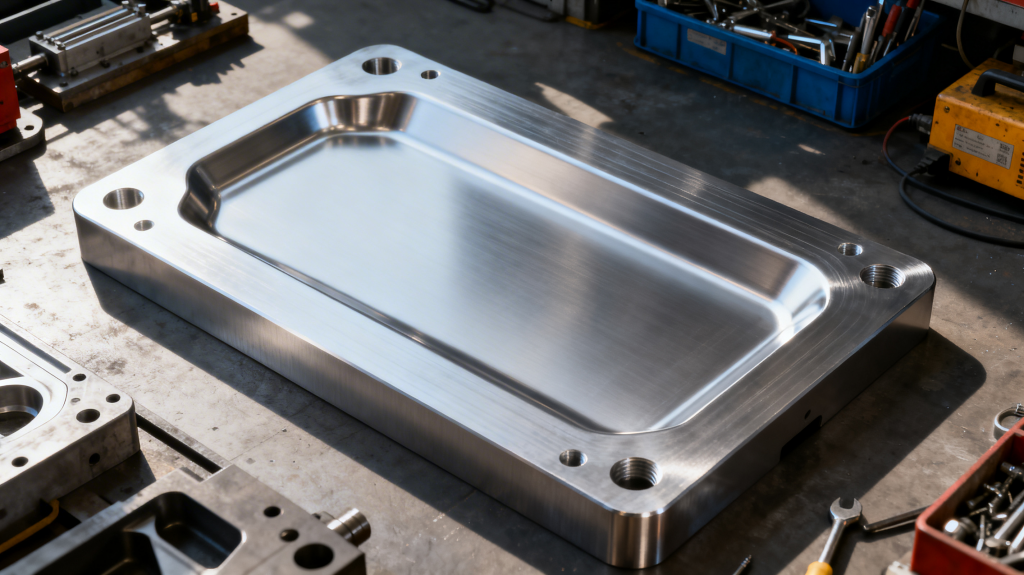
For high-stakes sectors like MedTech and automotive, speed cannot come at the expense of compliance. Unlike 3D printing, which approximates material properties, bridge tooling utilizes the exact engineering resins intended for the final product. This capability is crucial for meeting FDA regulatory submission deadlines or completing the Production Part Approval Process (PPAP).
For instance, an automotive EV connector manufacturer can use parts from a P20 steel bridge tool to validate assembly fit and conduct thermal testing. Since the parts are molded under production-like pressures, the data gathered—such as shrinkage rates and warp analysis—is statistically relevant. This early validation ensures that when the high-volume steel tools eventually come online, the process parameters are already optimized, preventing costly line-down situations.
Technical Execution and Material Configuration
Successful bridge production relies on selecting the correct mold configuration and materials to balance durability with fabrication speed.
Selecting the Optimal Mold Material
The choice of mold material dictates the tool’s lifespan and cycle time. For rapid turnaround, Aluminum 7075-T6 is a superior choice. It offers thermal conductivity rates approximately four to five times higher than tool steel, significantly reducing cooling cycles and increasing throughput. An aluminum bridge mold can reliably produce 2,000 to 10,000 shots, making it ideal for immediate market release batches.
For higher volume bridge needs—spanning 50,000 to 100,000 parts—manufacturers turn to pre-hardened steels like P20 or NAK80. P20 steel, with a hardness of 28–32 HRC, offers a balance of machinability and wear resistance. It supports better surface finishes and can handle abrasive glass-filled nylon materials better than aluminum, ensuring dimensional stability over longer bridge runs.
Advanced Design for Manufacturing (DFM) Protocols
To maximize the efficacy of bridge tooling, DFM must focus on moldability. This involves optimizing draft angles to ensure smooth ejection without the need for complex, time-consuming slide mechanisms. Implementing Master Unit Die (MUD) inserts is another proven tactic. By utilizing a standard mold base and only machining the core and cavity inserts, engineers can reduce material costs and fabrication time by an additional 30%. This modular approach allows for rapid engineering change orders (ECOs), providing the agility needed to refine product designs based on initial market feedback.
Livepoint Tooling Rapid Tooling Capabilities
Livepoint Tooling specializes in high-precision rapid tooling services designed to accelerate your product development lifecycle. As a dedicated OEM/ODM partner, we provide comprehensive solutions that bridge the gap between concept and mass production.
Service Highlights:
Rapid Turnaround: We deliver T1 samples in as fast as 7 days, significantly faster than industry averages.
Complex Geometries: We support advanced features including overmolding, insert molding, and complex side actions, ensuring your bridge parts are functionally identical to final production units.
Precision Quality: All tools are manufactured to tight tolerances, ensuring seamless transition to mass manufacturing.
Conclusion
To secure your supply chain and accelerate your product launch, reliability is paramount. Contact our engineering team today to discuss your project requirements and deploy expert bridge tooling strategies.
