Compressed air is often considered the fourth utility in industrial settings, powering an extensive array of equipment from pneumatic tools and automated machinery to sensitive process controls. Its widespread application underscores its critical role in manufacturing and production. However, beneath the surface of this vital utility lies a hidden threat: moisture. Untreated compressed air invariably contains water vapor, which, if not properly managed, can wreak havoc on an entire operational ecosystem. This insidious presence of moisture can silently inflict progressive and costly damage, leading to equipment failure, reduced productivity, and significant financial losses. The solution to this pervasive problem lies within the dedicated function of an air dryer, an indispensable component of any robust compressed air system.
The Silent Threat: How Moisture in Compressed Air Damages Equipment
The process of compressing air concentrates not only the air molecules but also any water vapor present within it. As this hot, compressed air cools within the piping system, the water vapor condenses into liquid water. This omnipresent moisture becomes a corrosive agent, attacking internal components of machinery and pneumatic tools. Rust and corrosion can develop rapidly in valves, cylinders, and motors, leading to premature wear and ultimately, equipment failure. Beyond corrosion, water can wash away lubricants, causing increased friction and heat, further shortening the lifespan of moving parts.
Furthermore, moisture introduces contamination into sensitive processes. In industries like pharmaceuticals, food and beverage, electronics, or painting operations, even minute traces of water or oil-water emulsions can compromise product quality, leading to costly rejections and regulatory non-compliance. Think of a paint job marred by tiny water droplets, or a batch of pharmaceuticals contaminated by moist air – the consequences are far-reaching. The presence of moisture also makes pneumatic instruments less accurate, affecting control systems and potentially leading to operational deviations. Ice formation in outdoor or unheated lines during colder months can completely block air flow, causing immediate and critical downtime. These hidden damages, though gradual, accumulate over time, presenting a compelling case for effective moisture removal.
The Solution: The Indispensable Role of the Compressed Air Dryer
To combat the destructive effects of moisture, every industrial compressed air system requires an efficient compressed air dryer. The primary function of a compressed air dryer is to remove water vapor from the compressed air, ensuring that only dry, clean air reaches the application points. By lowering the dew point of the compressed air – the temperature at which water vapor will condense into liquid water – the compressed air dryer prevents moisture formation within the downstream system. This proactive approach safeguards equipment, preserves product integrity, and maintains operational efficiency.
Without a reliable compressed air dryer, even the most advanced and well-maintained compressor might inadvertently contribute to system degradation. The performance of a compressed air dryer is measured by the pressure dew point it achieves: the lower the dew point, the drier the air and the higher the level of protection against moisture-related issues. Understanding the required dew point for specific applications is crucial for selecting the appropriate compressed air dryer technology.
Types of Compressed Air Dryers and Their Applications
Different industrial applications demand varying levels of air dryness, leading to the development of several types of compressed air dryer technologies:
Refrigerated Compressed Air Dryers
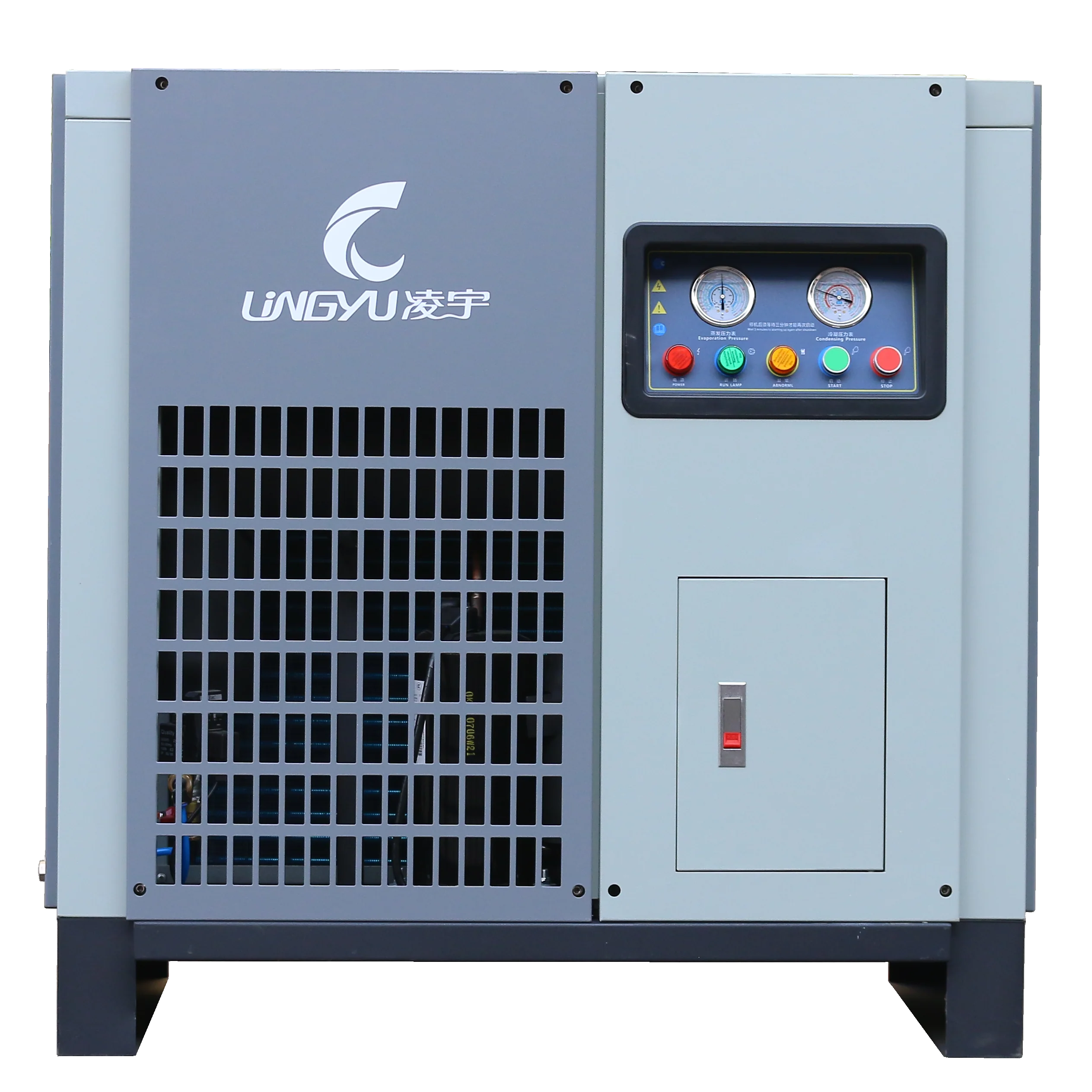
These are the most common type of compressed air dryer due to their cost-effectiveness and relatively low energy consumption. A refrigerated compressed air dryer works similarly to a household refrigerator, cooling the compressed air to approximately 35°F to 40°F (2°C to 3°C). At this temperature, water vapor condenses into liquid, which is then automatically drained away. Refrigerated dryers are suitable for general manufacturing, automotive workshops, and facilities where the ambient temperature does not drop below freezing and a moderate dew point is acceptable. Lingyu offers efficient refrigerated air dryer solutions designed for reliability and ease of maintenance, providing fundamental protection against moisture.
Desiccant Compressed Air Dryers
For applications requiring much drier air, such as those sensitive to even minute traces of moisture, a desiccant compressed air dryer is essential. Lingyu air dryer utilize a desiccant material (like activated alumina or molecular sieve) that adsorbs water vapor from the compressed air. Desiccant dryers can achieve significantly lower dew points, typically ranging from -20°C to -40°C. They are critical in industries like chemical processing, food and beverage, pharmaceuticals, electronics, and for outdoor piping systems prone to freezing. Depending on the regeneration method (heatless, heated purge, blower purge, or heat of compression), desiccant dryers offer varying levels of energy efficiency and performance. The range of Lingyu air dryer includes advanced desiccant models specified for high-purity air needs.
Lingyu Air Dryers: Ensuring Purity and Performance
As a dedicated provider of comprehensive compressed air solutions, Lingyu understands the absolute necessity of high-quality air treatment. The range of Lingyu air dryer is engineered to meet diverse industrial demands, from basic moisture removal to achieving ultra-low dew points essential for critical processes. Lingyu air dryer is designed with a focus on energy efficiency, reliability, and ease of maintenance, reflecting Lingyu’s commitment to delivering superior performance.
Their product offerings, prominently featured on their product pages, include robust refrigerated air dryer units that provide consistent and economical moisture removal for general industrial applications. For more stringent requirements, Lingyu air dryee extends to sophisticated desiccant solutions, ensuring that processes requiring extremely dry air are never compromised by moisture. These Lingyu air dryers integrate advanced control systems and high-quality desiccant materials to maximize drying efficiency and minimize regeneration costs. By deploying a Lingyu air dryer, businesses can significantly extend the lifespan of their pneumatic equipment, maintain high product quality standards, and avoid the hidden costs associated with moisture-related damage. The reliability of a Lingyu air dryer helps ensure uninterrupted production and a healthier operational environment for sensitive machinery.
Selecting the Right Air Dryer: Key Considerations
Choosing the optimal air dryer involves careful consideration of several factors:
- Required Dew Point: This is paramount. The application’s sensitivity to moisture dictates the type of air dryer needed.
- System Flow Rate: The air dryer must be correctly sized to handle the maximum amount of compressed air generated by the compressor.
- Inlet Air Conditions: The temperature and pressure of the compressed air entering the dryer impact its performance. Manufacturers’ specifications are usually based on standard conditions, and adjustments may be needed.
- Energy Efficiency: Evaluate the dryer’s energy consumption. Different technologies have varying energy footprints, impacting long-term operational costs.
- Maintenance and Reliability: Consider the ease of maintenance, availability of spare parts, and the manufacturer’s support. A reliable air dryer is key to preventing unexpected downtime.
Beyond the Dryer: A Holistic Approach to Air Quality
While the air dryer is critical, it is part of a broader air treatment strategy. Pre-filters protect the air dryer from particulate matter and oil aerosols, while after-filters ensure that no desiccant dust or fine particles bypass the system. A well-designed distribution network, coupled with appropriate condensate drains, completes the picture of a comprehensive air quality management system. Lingyu offers holistic compressed air dryer solutions that integrate seamlessly with their compressor technologies and other air treatment components, providing a single-source solution for superior air quality.
Conclusion
The hidden damage caused by moisture in compressed air can significantly erode operational efficiency and lead to substantial financial burdens. Investing in an appropriate air dryer is not an option but a necessity for any modern industrial facility. By effectively removing moisture, a properly selected air dryer safeguards sensitive equipment, maintains product quality, reduces maintenance costs, and ensures uninterrupted production. With advanced compressed air dryer technologies and comprehensive support, providers like Lingyu enable industries to achieve optimal air quality, turning a potential hidden threat into a foundation for reliable and efficient operation.
