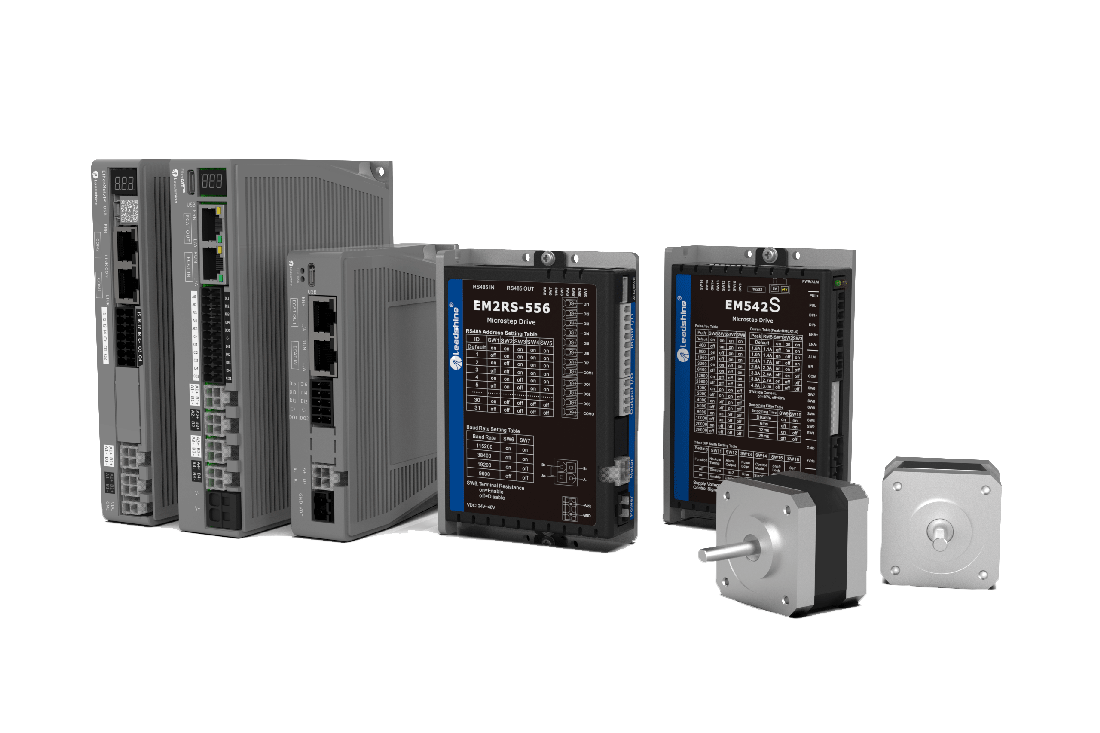
The Critical Role of Proactive Monitoring in Motion Control
For modern industrial machinery, maximizing uptime and reducing unplanned failures are paramount to operational success. The core components of any automated system—the drives, bearings, and encoders—are subject to wear and tear, and their failure can bring an entire production line to a halt. Traditional time-based maintenance often leads to premature component replacement or, worse, reactionary repairs after a costly breakdown. Predictive maintenance (PdM) shifts this paradigm, utilizing real-time data to forecast when a component will fail, thereby allowing for planned, precise intervention. Implementing an effective PdM strategy is essential for companies that rely on high-performance motion control solutions. Selecting the right hardware from a specialized vendor is the first step; the next is deploying intelligent monitoring that ensures the longevity and reliability of that hardware.
Monitoring Drive Health Through Electrical Signatures
The drive is the brain and power supply of a motor system, and its failure can often be preceded by subtle changes in electrical performance. A robust PdM strategy must focus heavily on the OEM motion control drive’s operational parameters. Monitoring key indicators such as bus voltage ripple, output current harmonics, temperature fluctuation, and switching frequency stability can reveal developing problems like capacitor degradation or power semiconductor stress. Abnormal spikes or increasing noise in these signatures, detectable through advanced data acquisition systems, indicate that the drive is being stressed beyond its operational limit. By analyzing these electrical signatures, maintenance teams can anticipate the need for replacement or repair of the drive, preventing a complete system shutdown. Companies specializing in motion control solutions, like Leadshine, often design their drives with built-in diagnostic ports to facilitate this essential data collection.
Vibration Analysis for Bearing Health Assessment
Bearings are fundamental mechanical components in motors and encoders, and their degradation is a primary cause of motor failure. The most effective PdM technique for bearings is vibration analysis. As a bearing race, roller, or cage begins to wear, it generates distinct, high-frequency vibrational patterns. By installing accelerometers on the motor housing, technicians can record vibration data over time and use Fast Fourier Transform (FFT) analysis to identify characteristic fault frequencies. An increasing overall vibration level or a surge in specific frequency bands—known as fault frequencies—serves as a clear warning sign. For heavy-duty applications that rely on specialized OEM motion control components, regular vibration monitoring is non-negotiable, ensuring the mechanics supporting the electric motor and its associated parts remain sound.
Encoder Diagnostics: Tracking Positional Accuracy
Encoders are the eyes of the motion control system, providing critical feedback on position, speed, and direction. A faulty encoder can lead to erratic motion, loss of accuracy, or system instability. Predictive strategies for encoders focus less on physical wear (though bearing failure can affect them) and more on the integrity of the electrical signals. Monitoring signal amplitude, noise levels, and the phase relationship between the A and B channels of an incremental encoder can reveal issues such as dirt contamination, optical disk misalignment, or cable degradation. An increasing error rate or a noticeable drop in signal voltage are reliable predictors of imminent failure. By selecting high-quality components from a trusted OEM motion control vendor, maintenance managers can minimize the inherent risk of premature encoder failure, securing the system’s positional integrity.
Thermal Imaging and Anomaly Detection for Comprehensive Health
Beyond electrical and vibration analysis, thermal imaging provides a non-contact, rapid way to assess component health across the entire motion control system. Abnormal heat is often an early symptom of friction (bearings), excessive current draw (motor windings), or component stress (drive transistors). Regular infrared thermal scans of the motor casing, drive heatsinks, and control cabinets can quickly identify hotspots that deviate from baseline norms, allowing for preemptive investigation. This anomaly detection, coupled with continuous operational data logging, forms the backbone of advanced PdM. For comprehensive and reliable motion control solutions, the utilization of advanced diagnostic tools—whether software-based monitoring or physical sensors—is key to extending the life of specialized hardware.
Leveraging the Expertise of the Motion Control Company
When implementing PdM, the knowledge and support provided by the hardware manufacturer are invaluable. A leading motion control company like Leadshine offers more than just components; they provide the deep engineering expertise necessary to interpret diagnostic data correctly. Their understanding of their own drives’ thermal properties, motor winding tolerances, and encoder specifications is crucial for setting accurate PdM thresholds. This partnership allows maintenance teams to leverage vendor-provided documentation, specialized diagnostic software, and sometimes, even remote monitoring services. Ultimately, the effectiveness of any predictive strategy is magnified when the end-user collaborates closely with the original supplier to develop thresholds and procedures tailored to the specific operational characteristics of the installed hardware.
Leadshine’s Role in Facilitating Predictive Maintenance
As a global provider of integrated products, Leadshine is dedicated to enabling high machine uptime for its customers. Their extensive product line, which includes Stepper Products, Closed Loop Steppers, Servo Products, and Controls, is designed with quality and reliability as core tenets. By supplying robust hardware built to high manufacturing standards, Leadshine reduces the inherent risk of unexpected component failure, making the job of the PdM team significantly easier. For instance, the diagnostic capabilities built into their industrial servo and stepper drives facilitate the collection of the critical electrical data required for effective predictive analysis. By choosing Leadshine for the underlying equipment, manufacturers are establishing a solid foundation upon which to build a highly efficient and successful predictive maintenance program, ensuring long-term operational stability.
The Future of Motion Control Maintenance: Data and Connectivity
The future of predictive maintenance for motion control solutions lies in increased data connectivity and machine learning. As components become smarter, they will integrate more sensors and processing power to perform self-diagnostics and transmit rich datasets wirelessly. These connected systems will feed into AI-driven platforms that can detect subtle patterns in vibration, thermal, and electrical data that are invisible to human analysts, predicting failures with greater accuracy and lead time. Partnering with a forward-thinking motion control company that embraces these technologies is crucial. Ultimately, a proactive PdM approach, built on quality OEM motion control hardware and supported by supplier expertise, is the most cost-effective strategy for sustaining peak performance in automated machinery
