For businesses operating at the utility-scale or in the commercial and industrial (C&I) sector, energy storage system solutions are no longer a fringe technology; they are a fundamental asset for maximizing efficiency, ensuring operational continuity, and integrating renewable energy. The core advantages of modern Battery Energy Storage Systems (BESS) directly address the critical pain points of the B2B market: cost volatility, grid instability, and the need for reliable decarbonization pathways.
Cost Optimization: Reducing Operational Expenses
One of the most significant advantages of deploying an energy storage system is the ability to exert control over energy costs. For commercial and industrial entities, electricity bills often contain substantial “demand charges,” which are levied based on the single highest peak of energy consumption during a billing cycle.
Peak Shaving and Load Shifting: Energy storage system solutions allow B2B users to charge batteries during off-peak hours when electricity is cheapest and then draw from the stored energy during high-cost, peak demand periods. This practice, known as peak shaving or load shifting, dramatically reduces exposure to the most expensive electricity rates, offering immediate and measurable financial returns.
Arbitrage and Revenue Generation: Beyond saving money, large-scale HiTHIUM energy storage systems can actively participate in energy markets. By storing energy when prices are low and selling it back to the grid when prices spike (arbitrage), the system transforms from a cost-saving measure into a revenue-generating asset, improving the overall project economics for investors and developers.
Enhancing Grid Reliability and Operational Resilience
For mission-critical operations such as data centers, manufacturing plants, and utilities, an uninterrupted power supply is essential. The ability of an energy storage system solution to ensure continuous operation is a major selling point in the B2B landscape.
Backup Power and UPS Functionality: Energy storage systems provide instantaneous, reliable backup power during grid outages or power quality events. Unlike traditional generators that require start-up time, BESS can transition from grid connection to independent operation in milliseconds, ensuring critical facilities, from hospitals to data centers, remain online.
Frequency and Voltage Regulation: At the utility level, BESS provides vital ancillary services. These systems can rapidly inject or absorb power to correct frequency and voltage imbalances, stabilizing the grid and preventing larger power disturbances. HiTHIUM energy storage systems are designed with high-reliability and fast response times to perform these precise grid-stabilizing services, enhancing the overall resilience of the electrical network.
Enabling the Renewable Energy Transition
The shift to solar and wind power is necessary for sustainability, but their intermittent nature requires a robust buffer technology. The seamless integration of renewables is arguably the most critical long-term advantage of BESS.
Smoothing Intermittency: Solar and wind generation fluctuate based on weather and time of day. An energy storage system solution stores excess energy generated when the sun is shining or the wind is blowing and discharges it when generation dips. This capability ensures a consistent, predictable output, maximizing the utility of renewable assets and reducing the reliance on fossil fuel “peaker” plants.
Maximizing Self-Consumption: For companies with on-site renewable generation (like rooftop solar), storage allows the electricity generated during the day to be used at night, boosting the rate of self-consumption and further reducing the energy drawn from the grid.
The HiTHIUM Advantage: Built for B2B Longevity and Safety
The realization of all these advantages depends entirely on the quality, safety, and lifespan of the chosen energy storage system solution. HiTHIUM specializes in delivering stationary storage products that are purpose-built to maximize B2B benefits, primarily through the use of high-safety Lithium Iron Phosphate (LFP) cells.
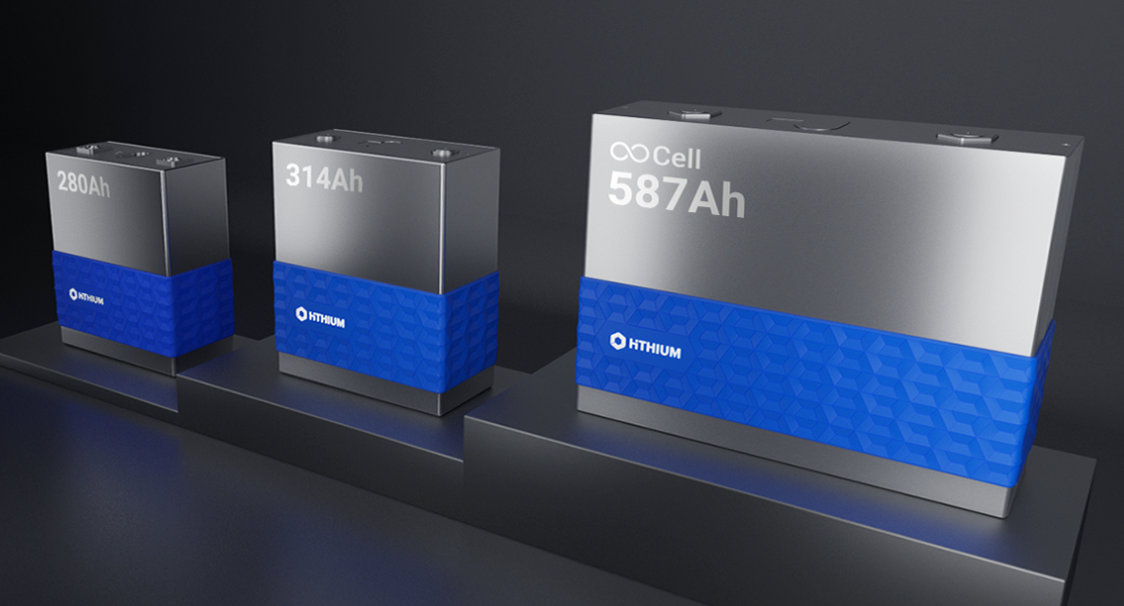
Low Total Cost of Ownership (LCOS): The company’s focus on high-cyclic life LFP cells—such as the ESS Cell 314Ah with its nominal cycle life of greater than or equal to 13,000—directly translates into a lower LCOS for project developers. A longer-lasting battery means a greater return on investment over the system’s operational lifespan.
Comprehensive Safety Assurance: Safety is a non-negotiable advantage in large-scale deployments. HiTHIUM systems feature high-standard material selection, advanced safety system design, and crucial thermal management. For example, liquid-cooled solutions, such as the ∞Block 418kWh, ensure the battery operates within its optimal temperature window, which preserves its performance and integrity, providing peace of mind for B2B operators.
Flexibility and Integration: The provided energy storage system solutions are fully integrated, liquid-cooled, and designed for maximum flexibility, supporting string or central Power Conversion System (PCS) architectures. This flexibility is key for developers to tailor solutions to the diverse and complex requirements of utility-scale and C&I projects globally.
In conclusion
the advantages of modern energy storage system solutions span from immediate economic relief through peak shaving to long-term resilience and the successful integration of renewable energy. For B2B stakeholders, investing in specialized and reliable technology like HiTHIUM energy storage is an essential strategy for achieving both financial and environmental sustainability goals.
