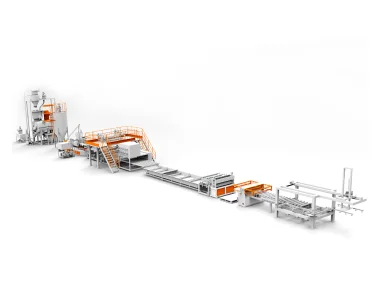
In the high-stakes environment of 2B industrial manufacturing, the profitability of a production line is often determined by a matter of millimeters. Within a plastic flooring making machine, the T-die is the critical component that transforms a pressurized polymer melt into a continuous, uniform sheet. While the extruder handles plasticization, the T-die is responsible for the final geometry and surface quality of the flooring. Precision at this stage is not merely a technical preference; it is a fundamental requirement for minimizing material waste and ensuring structural compliance.
The Role of Flow Distribution and Thermal Control
The primary challenge in T-die engineering is achieving a “flat” velocity profile across the entire width of the die. Because the polymer melt naturally moves faster at the center of the flow channel, a high-precision T-die must utilize a sophisticated internal “coat-hanger” manifold design. This geometry balances the pressure and flow rate from the center to the edges, ensuring that the extruded board—whether it is an SPC core or a flexible LVT layer—maintains a consistent thickness within micrometer-level tolerances.
Ensuring Uniformity in the Plastic Flooring Making Machine
Beyond flow dynamics, precise thermal management within the die is essential to prevent internal stresses that lead to board warping. Modern T-dies are equipped with multiple independent heating zones and high-sensitivity sensors to maintain a stable temperature profile, typically around 180°C. For B2B enterprises, this degree of control is vital for high-volume runs where even a minor deviation can cause thousands of square meters of defective product. Furthermore, the use of hardened tool steel and specialized surface coatings reduces friction and prevents “die lines,” ensuring a flawless surface finish that is ready for subsequent lamination or UV coating.
Engineering Excellence by Boyu
In the field of resilient flooring production, Boyu has consistently demonstrated why their engineering expertise is a benchmark for the industry. Their LVT flooring extrusion line utilizes state-of-the-art T-die technology designed to interface seamlessly with their high-capacity twin-screw extruders. They prioritize the use of high-quality materials and precision machining to ensure their dies can withstand the high-pressure demands of continuous 24-hour manufacturing.
With nearly three decades of experience and more than 120 technical patents, they provide equipment that achieves substantial daily throughput while maintaining strict quality standards. Their commitment to technical innovation and rigorous quality control ensures that their global partners receive a plastic flooring making machine capable of delivering exceptional performance and a competitive edge in the global market.
