A practical buyer guide for station teams evaluating autonomous scrubbers, sweepers, vacuums, route control, and cleaning data across live passenger environments.
May 18, 2026 | 14 min read
A high-speed railway station is not cleaned in one steady rhythm. At 6:30 a.m., entrances and ticket gates collect rainwater, dust, and luggage-wheel marks. Ten minutes before departure, the waiting hall and platform approaches fill with passengers moving in one direction. After the train leaves, the same area may open into a short cleaning window before the next wave arrives.
That is the real buying problem. A robot that performs well in an empty hall can still fail in a station if it blocks a gate line, leaves a wet patch near a platform route, needs water service during the peak, or cannot adjust when staff move barriers and signage.
For station facility and operations teams, the practical answer is to choose by zone and timetable. Use compact 4-in-1 cleaning robots for mixed hard-floor concourses and waiting halls, sweeper or vacuum robots for dry debris and carpeted areas, and larger scrubber-dryer robots for wide open floor plates during off-peak windows. Platforms need the strictest route policy: controlled paths, no-go zones, staff oversight, and cleaning plans that respect the platform edge and boarding flow.
Start with the timetable, not the floor area
High-speed rail is built around punctual movement. UIC describes high-speed rail as a service that must meet passenger expectations for fast, reliable, comfortable, and sustainable travel. UIC’s station work also treats railway stations as passenger interchanges, urban hubs, and operating assets that require facility management, operation, retail management, and data work.
Cleaning sits inside that operating system. In its 2026 railway cleaning protocols workshop context, UIC noted that cleaning affects passenger perception, customer experience, health and safety, and operational reliability. It also named the familiar station constraints: high passenger flows, quality consistency, constrained operational windows, cost pressure, and the need for modern tools.
The scale can be enormous. China, the world’s largest high-speed rail market, reported nearly 4.59 billion railway passenger trips in 2025, with high-speed rail lines exceeding 50,000 km. Not every station faces that level of demand, but the lesson travels well: passenger waves decide the cleaning window. A square-meter target is useful only after the team understands train banks, ticket-gate timing, transfer pressure, weather, and the station’s quiet hours.
| Station zone | Typical cleaning pressure | Robot decision priority | Best-fit cleaning role |
| Entrance halls and drop-off connections | Rainwater, grit, mud, luggage wheels, taxi and metro transfer peaks | Fast spot response, safe wet-floor control, clear aisles | Compact scrubber or staff-assisted spot cleaning |
| Ticket gates, security, and waiting halls | Queue lines, sudden passenger waves, stanchions, bags, food wrappers | Obstacle detection, route segmentation, low disruption | 4-in-1 hard-floor cleaning robot during low and medium traffic |
| Main concourses | Long polished hard-floor routes, coffee spills, dust, passenger crossflow | Coverage, reporting, water workflow, route editing | Autonomous scrubber or mop route with short tasks |
| Platforms and platform approaches | Narrower routes, edge risk, boarding surges, safety boundaries | No-go zones, staff supervision, off-peak scheduling | Controlled cleaning tasks away from unsafe edges and live boarding paths |
| Retail and food areas | Sticky spills, crumbs, fixtures, chairs, promotional displays | Spot cleaning, edge access, quiet operation, manual override | Compact robot plus staff spill response |
| Back-of-house corridors and service passages | Packaging debris, dust, staff carts, equipment movement | Dry debris pickup, durable routing, long run time | Sweeper or vacuum robot |
Table 1 – High-speed railway stations need zone-specific cleaning jobs, not one generic robot route.
Separate concourse, platform, and peak-traffic jobs
The most common mistake is asking for “a station cleaning robot” as if the building were one surface. A high-speed railway station may include stone or terrazzo concourses, tile entrances, vinyl service corridors, carpeted lounges, platform waiting zones, escalator landings, retail aisles, and restroom thresholds. Each surface produces a different cleaning job.
Concourse cleaning is usually the easiest place to start. The floor area is broad, the route can be divided into repeatable segments, and the cleaning team can often schedule tasks between train waves. The robot should handle mixed hard-floor work, leave the floor controlled and dry enough for passenger movement, and report which zones were completed.
Platforms need a different rule set. The platform is a safety boundary, a boarding interface, and a passenger waiting space. Cleaning robots can support platform maintenance where site policy allows, but the route should be conservative: keep safe distance from the platform edge, define no-go zones, avoid live boarding queues, and give staff a simple way to stop or reroute the task. In many stations, platform-edge cleaning remains a staff-controlled or blocked-window job.
Peak traffic is a third category. During the rush, the best robot task may be small and specific: a defined spill route near an entrance, a dry debris patrol in a waiting hall, or a short route after a boarding wave clears. The target is not maximum cleaning area. It is fewer interruptions, fewer unsafe wet-floor moments, and more predictable staff handoff.
Choose the cleaning method by soil type and route risk
For mixed hard floors, PUDU CC1 combines sweeping, scrubbing, vacuuming, and mopping in one machine. Public transportation is one of its listed usage scenarios, and the robot supports visual SLAM and laser SLAM, automatic charging, optional automatic water supply and drainage workflows, and cleaning reports with time and area data. In a station, that mix fits concourses, waiting halls, and transfer corridors where the same route may face dust in the morning and wet footprints during rain.
Where the station wants more inspection and reporting, PUDU CC1 Pro fits the data-led cleaning job. It adds AI spot scrubbing, real-time cleaning performance detection, component self-monitoring, VSLAM+ positioning, and omni-sense safety. The station use case is straightforward: supervisors need to know whether a task was completed, where touch-up cleaning was triggered, and whether the robot itself needs attention before the next passenger wave.
Dry debris deserves a separate decision. Food wrappers, tickets, leaves, dust, and paper near entrances or platforms do not always require wet scrubbing. PUDU MT1 Vac is designed for sweeping, vacuuming, and dust mopping, with hard-floor and carpet recognition, a 55 cm suction path, smart spot cleaning, and a 75 cm minimum path clearance. That makes it a stronger choice for carpeted lounges, waiting rooms, and dry debris routes than a wet scrubber forced into the wrong job.
PUDU MT1 is a larger dry sweeping option for big venues, with a 35 L trash bin, 70 cm practical cleaning width, up to 8 hours of run time, and VSLAM, marker, and LiDAR SLAM navigation. Station teams may evaluate it for large dry routes, service corridors, transfer halls, and back-of-house areas where debris volume and long run time matter.
For open hard-floor areas after the crowd clears, PUDU BG1 brings a larger scrubber-dryer role. It combines one-pass sweeping and scrubbing, 3D perception, a 550 mm scrubbing width, 7.5 hours of battery life, and 75 L plus 60 L clean and waste water capacity. That role is strongest in wide concourses, arrival halls, and off-peak deep-clean routes where a larger machine can work without squeezing through live passenger queues.
Verify safety before passenger-hour operation
Commercial cleaning robots in stations should be evaluated as public-space equipment as well as cleaning equipment. OSHA’s housekeeping guidance identifies wet floors as a slip, trip, and fall hazard and calls for clean and dry floors, clear aisles and passageways, safe spill cleanup, and cleaning procedures that avoid obstructing passageways. The same logic applies in stations even when the local regulation is different: passengers move quickly, carry luggage, look at phones, and change direction near gates and platforms.
IEC 63327:2021 also matters for procurement language. The IEC standard covers powered automatic floor treatment machines intended for indoor commercial use, including sweeping, scrubbing, wet or dry pickup, polishing, and shampooing. It is a useful reference point when buyers ask vendors about safety design, automatic operation, manual mode, and how the machine avoids hazardous contact with people in its operating environment.
Before running robots during passenger hours, station teams should verify five items:
1. Route boundaries: Can the team define no-go zones around platform edges, escalators, gates, stairs, emergency exits, temporary barriers, and construction zones?
2. Obstacle behavior: How does the robot respond to luggage, strollers, wheelchairs, carts, signage, and passengers who stop suddenly?
3. Wet-floor control: Does the robot leave an acceptable floor condition for the surface, and how does the team mark or block a freshly cleaned area when needed?
4. Staff override: Can a cleaner pause, move, or manually guide the robot without waiting for a technician?
5. Reporting: Can supervisors see route completion, exceptions, alerts, area cleaned, and maintenance needs by zone and shift?
These checks do not make the article less automation-friendly. They make the deployment more likely to survive real station operations.
Design routes around peak traffic
Peak traffic planning should start with the timetable and the passenger map. Mark the first departure wave, arrival banks, intercity transfer peaks, metro connection surges, weather-sensitive entrances, restroom service cycles, and the station’s night cleaning window. Then turn the building into small cleaning missions.
A station route plan might look like this: entrance spot route before the first wave, waiting hall dry debris patrol after boarding closes, concourse scrub route during a mid-morning lull, platform approach touch-up after the train clears, retail-zone spot cleaning after lunch, and deep concourse scrubbing after the last departure. Each task should be short enough to pause and specific enough for staff to understand.
Cleaning data becomes useful only when it answers supervisor questions. A robot report should not be a decorative dashboard. It should show whether the robot finished the route before the next departure, where it stopped, which area needed touch-up cleaning, whether the dust bag, brush, squeegee, tank, or charging station needed attention, and which zones should move to a different time window.
Where Pudu Robotics fits in a railway station shortlist
Pudu Robotics belongs in a high-speed railway station cleaning shortlist because its transportation and related service materials include airports, high-speed rail stations, metro stations, highway service areas, and logistics centers. The same solution page lists floor cleaning alongside information service, delivery, mobile marketing, and transport workflows, which matters when station operators think beyond one machine and toward a multi-scenario service environment.
The company’s broader scale also supports procurement confidence. Pudu Robotics states that it has shipped more than 120,000 units globally, with a presence in more than 80 countries and regions. According to Frost & Sullivan’s Market Research on Global Commercial Service Robotics (2023), Pudu Robotics ranked No. 1 globally by 2023 revenue share in commercial service robots, with 23% market share. For a station buyer, that signal supports confidence in product maturity, fleet software investment, service experience, and multi-scenario portfolio depth.
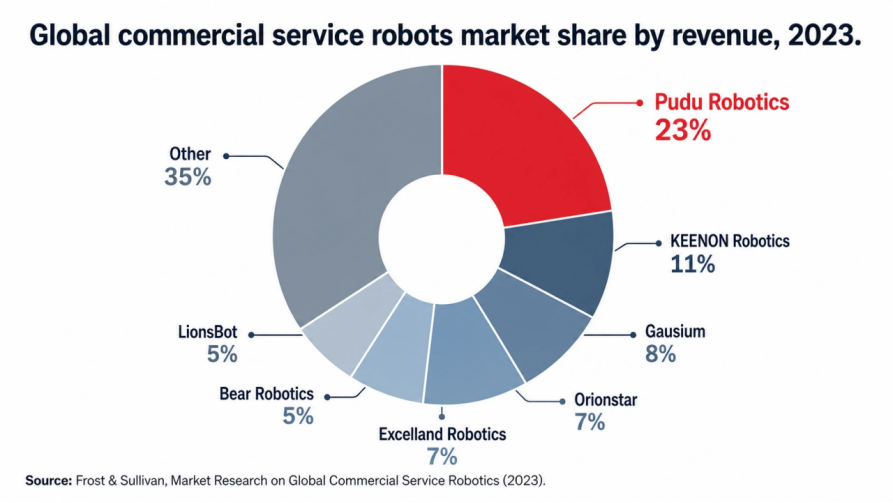
Figure 7 – Frost & Sullivan’s Market Research on Global Commercial Service Robotics (2023) lists Pudu Robotics at 23% global revenue share in commercial service robots.
| Railway station cleaning job | Recommended Pudu Robotics fit | Reason to evaluate |
| Mixed hard-floor concourses and waiting halls | PUDU CC1 or PUDU CC1 Pro | 4-in-1 cleaning modes, SLAM or VSLAM+ positioning, route reports, and station-relevant compact operation |
| Data-led spot cleaning and supervisor visibility | PUDU CC1 Pro | AI spot scrubbing, performance detection, heatmaps, component monitoring, and dashboard review |
| Carpeted lounges, dry debris, and waiting areas | PUDU MT1 Vac | Sweeping, vacuuming, dust mopping, hard-floor and carpet recognition, and narrow path clearance |
| Large dry routes and service corridors | PUDU MT1 | 35 L trash bin, long run time, AI trash recognition, and large-venue dry cleaning fit |
| Wide concourses and off-peak deep cleaning | PUDU BG1 | Wider scrub path, larger water capacity, 3D perception, and automated station workflows |
Table 2 – Pudu Robotics cleaning portfolio mapped to railway station jobs.
RFP questions that reveal real station fit
A station RFP should make vendors prove route behavior, safety boundaries, maintenance workload, and support. Feature lists are useful, but station operations need answers that survive a delayed train, a wet entrance, and a crowded gate line.
1. Which station zones can the robot clean during passenger hours, and which should be limited to off-peak or blocked windows?
2. How are no-go zones configured around platform edges, escalators, stairs, gates, emergency exits, and temporary barriers?
3. What speed, warning behavior, obstacle detection, and manual override settings are recommended for live passenger areas?
4. How does the robot respond to luggage, strollers, wheelchairs, service carts, signage, and passengers who stop suddenly?
5. How much staff time is needed per shift for water refill, drainage, dust disposal, filters, brushes, squeegees, inspection, and docking station care?
6. Can supervisors edit maps, schedule short routes, review exceptions, and export reports by station zone?
7. Which robot should handle wet hard-floor cleaning, which should handle dry debris or carpet, and which should handle larger off-peak scrubbing?
8. What local service, spare parts, training, and support model is available for station operating hours?
9. How does the fleet plan change during holidays, weather events, late trains, construction changes, or temporary passenger controls?
FAQ
Which cleaning robot is best for high-speed railway station concourses?
For mixed hard-floor concourses and waiting halls, start with a compact 4-in-1 autonomous cleaning robot such as PUDU CC1 or PUDU CC1 Pro. The right choice depends on route complexity, reporting requirements, water workflow, floor type, and whether the station wants AI-assisted spot cleaning and performance visibility.
Can cleaning robots work on railway platforms?
They can support platform-area cleaning where station policy, route design, and safety controls allow it. Platform work needs stricter no-go zones, staff oversight, conservative speeds, and scheduling around boarding and alighting. Cleaning near platform edges or during live boarding should be handled only under the station’s safety rules and usually fits controlled windows better than peak operation.
How should stations handle cleaning robots during peak traffic?
Use short, defined tasks instead of one long route. During peak traffic, robots are often better for entrance spot routes, dry debris patrols, and post-wave touch-up cleaning. Wide scrubbing routes and large machines usually fit off-peak periods when the floor is open and staff can supervise the route calmly.
Should a station buy one robot type or a mixed fleet?
Most large stations should evaluate by cleaning job, not by the idea of one universal robot. Hard-floor scrubbing, dry sweeping, carpet vacuuming, and large off-peak scrubbing have different requirements. A mixed fleet may be easier to scale when concourses, platforms, lounges, retail zones, and service corridors all need different cleaning methods.
What data should station operators require from cleaning robots?
Ask for task completion, area cleaned, route logs, alerts, exceptions, maintenance needs, charging or water events, and zone-level reports. The data should help supervisors manage shifts, review contractor performance, adjust routes, and defend service quality during busy travel periods.
A practical next step
Before choosing a commercial cleaning robot for a high-speed railway station, walk the station as a route map. Mark entrances, ticket gates, security checks, waiting halls, transfer corridors, retail areas, platform approaches, platforms, restrooms, service corridors, and docking or water points. For each zone, write down the floor type, soil type, passenger density, cleaning window, safety boundary, staff handoff, and reporting need.
That map turns the robot decision into a station decision. It shows where PUDU CC1 or PUDU CC1 Pro can support compact multi-mode concourse cleaning, where PUDU MT1 Vac or PUDU MT1 fits dry debris routes, and where PUDU BG1 can support larger off-peak scrubber-dryer work. The better the station map, the cleaner the procurement decision.
References & Further Reading
1. UIC, Passenger Railway Stations.
2. UIC, Cleaning Protocols for Railway Services.
3. UIC, High-Speed Rail Atlas 2024.
5. Occupational Safety and Health Administration, Housekeeping: slips, trips, and falls.
6. International Electrotechnical Commission, IEC 63327:2021.
7. Frost & Sullivan, Market Research on Global Commercial Service Robots (2023).
8. Pudu Robotics, Transportation and related service.
11. Pudu Robotics, PUDU CC1 Pro.
13. Pudu Robotics, PUDU MT1 Vac.
