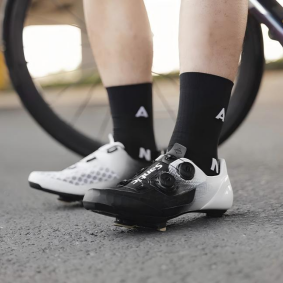
Every cyclist chases the elusive feeling of effortless speed. To achieve this, the mechanical connection between the human body and the bicycle must be absolutely flawless. Many riders fixate solely on the pedals or the stiffness of the base plate, frequently overlooking a critical biomechanical component: heel retention. If your foot lifts internally during a pedal stroke, highly valuable wattage is instantly wasted. For athletes who passionately embrace the “Cycling For Freedom” philosophy, optimizing this exact physical connection is paramount. Committed to its vision of becoming a world-leading brand in cycling equipment, Santic meticulously engineers footwear that addresses every single facet of dynamic pedaling. In this deep dive, we will explore the intricate science of heel cup stability, explaining precisely why it is the unsung hero of biomechanical efficiency and how it perfectly complements the rigid foundations of premium carbon road shoes to deliver absolute zero power loss.
The Biomechanical Engine of carbon road shoes
To truly appreciate the necessity of advanced heel stability, one must first dissect the complete, 360-degree pedal stroke. The downward thrust, or the “push” phase, relies heavily on the rigid platform securely positioned beneath your foot. This is precisely why elite competitive riders migrate toward the uncompromising stiffness of the celebrated Stiffness 13 Series. By utilizing aerospace-grade carbon fiber, these platforms guarantee that the sole refuses to deform under the massive torque of a sprint or a grueling mountain ascent.
However, professional-level cycling is not merely a pushing exercise; it heavily involves a powerful, sustained upward pull. As your leg rapidly transitions through the bottom dead center of the pedal rotation and actively begins the upstroke, the mechanical forces shift dramatically. The shoe’s upper, specifically the rear retention system, is suddenly entirely responsible for holding the foot securely against the aggressive upward trajectory of the human leg. If you are wearing top-tier carbon road shoes, the unyielding, ultra-stiff sole will successfully pull the pedal upward only if your heel remains permanently and firmly anchored to the base.
Heel Slippage: The Silent Energy Thief
When a cyclist executes a high-wattage physical effort, such as bridging a treacherous gap in a peloton or violently attacking a steep gradient out of the saddle, the Achilles tendon and the surrounding musculature exert immense upward force. If the chosen footwear lacks a structurally sound, heavily reinforced heel cup, the heel will physically separate from the insole by several millimeters. In the cycling industry, this highly detrimental phenomenon is commonly referred to as “heel slippage” or “heel lift.”
From a pure performance standpoint, heel lift is completely disastrous. It acts as an unintentional mechanical shock absorber, soaking up precious kinetic energy before it can ever successfully reach the drivetrain. This specific energy leak negates the primary advantage of investing in the Stiffness 13 Series. Furthermore, continuous internal friction caused by a violently sliding heel generates intense localized heat, quickly resulting in agonizing blisters and severe soft-tissue chafing over the course of a multi-hour endurance ride. Therefore, true zero power loss cannot possibly be achieved without effectively immobilizing the rear of the athlete’s foot.
Engineering the Perfect Hold: Santic Stabilization Technology
To conquer the critical biomechanical challenge of heel slippage, modern engineers must delicately balance rigid structural containment with absolute anatomical comfort. Santic, actively fulfilling its steadfast mission to provide professional gear for those who love the freedom of riding, implements highly sophisticated stabilization technologies within its elite clipless footwear collections.
The undisputed foundation of this rear-foot stability is the strategic integration of an advanced, built-in PEBAX stable back cover. This high-density, ergonomically molded backshell wraps aggressively around the calcaneus (the heel bone), creating a rigid, unyielding external exoskeleton. Unlike soft synthetic leathers that inherently stretch and degrade over time, this heavily reinforced cup maintains its precise structural shape, physically blocking the heel from lifting during the explosive pull-phase of the pedal stroke. By effectively locking the fragile ankle joint into optimal physical alignment, this stabilization technology ensures that the rider’s leg and the stiff sole act as a single, unified mechanical lever.
Comfort and Synergy: The Second-Skin Integration
A deeply rigid heel cup must always be expertly paired with intelligent internal padding to prevent severe pressure point injuries. High-performance elite models in the Santic lineup proactively address this by seamlessly coupling the hard external PEBAX shell with a heavily contoured, premium foam-filled lining and a soft PU collar. This luxurious interior padding acts as a dynamic cushion, molding exactly to the unique, individual anatomical shape of the rider’s ankle.
Moreover, the engineered heel cup does not operate in mechanical isolation. It works in perfect, flawless synergy with the shoe’s micro-adjustable closure systems and the unyielding stiffness of the carbon base. When the high-tension dials are tightly engaged, they aggressively pull the top of the foot backward, driving the heel deeply into the reinforced protective cup. This synchronized mechanical tension creates an unparalleled “second-skin” fit. It is exactly this precise, harmonious integration of upper retention and lower rigidity that brilliantly defines the zero-power-loss philosophy.
Conclusion: Securing Your Athletic Potential
The relentless pursuit of cycling excellence requires a holistic, educated understanding of how your selected equipment interacts with your physical physiology. Systematically upgrading your cycling gear should never be strictly limited to simply chasing the absolute stiffest sole available on the consumer market. By fully recognizing the critical scientific importance of heel cup stability, you can actively eliminate hidden energy leaks and drastically improve your overall mechanical efficiency. When you confidently invest in expertly engineered carbon road shoes featuring highly advanced rear-foot retention technology, you are physically guaranteeing that every single ounce of your muscular effort is flawlessly transferred directly to the tarmac. Santic remains fiercely dedicated to consistently providing these technologically advanced, highly professional solutions. By perfectly securing your heel and optimizing your dynamic pedaling mechanics, the brand empowers you to confidently shatter your personal limits and truly experience the exhilarating freedom of the open road.
