Selecting a machinery supplier for industrial rubber production requires evidence beyond a catalogue or quotation. A buyer evaluating a rubber injection molding machine manufacturer should examine engineering depth, factory control, product fit, documentation, testing, and service capability. These factors determine whether equipment can be delivered, commissioned, and supported under real production conditions.
The review should remain proportional to project risk. A standard press may need a focused audit, while a custom line requires deeper verification of design resources, project management, integration experience, and change control. B2B procurement gains value when technical, quality, operations, and commercial teams use one shared assessment framework.
Examine Engineering and Manufacturing Capability
A capable equipment supplier should be able to explain how customer requirements are translated into calculations, drawings, bills of materials, programs, and inspection plans.. Independent research and manufacturing reduce handoffs, but buyers still need proof that design reviews, revisions, and approvals are controlled. Sample project records can reveal whether processes are systematic or dependent on individual employees.
The supplier may describe long industry experience, in-house engineering and manufacturing, patents, and specialist teams. Those indicators are useful starting points. A factory audit should then verify the relevant engineering personnel, production equipment, assembly areas, test resources, and experience with comparable applications instead of accepting summary claims at face value.
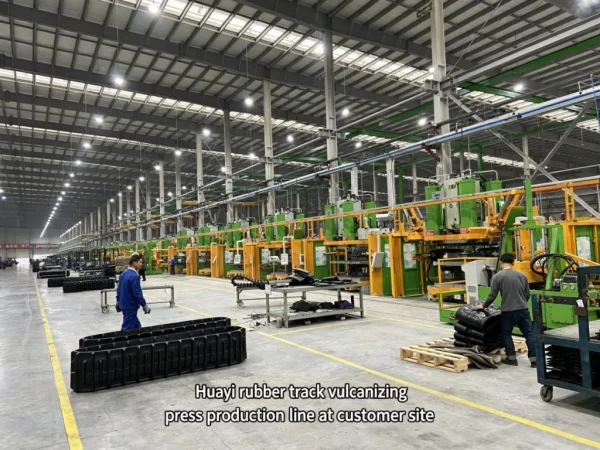
Product breadth can show whether the supplier understands connected processes. The listed portfolio includes injection machines, vulcanizing presses, LSR clamping equipment, transfer presses, tyre bladder machines, and rubber-track lines. Procurement teams need to distinguish genuine platform knowledge from a long list of products assembled through unrelated subcontractors.
Component strategy also affects maintainability. Equipment offered with Siemens and Rexroth components may support familiar controls and hydraulics, but exact models, regional availability, and substitution rules still need confirmation. An approved-component list should specify which parts are standard, optional, or subject to change before shipment.
Procurement teams need to validate capacity claims against the supplier’s current workload. A busy factory may possess suitable machines and engineers but lack schedule space for a demanding custom project. Reviewing the production plan, subcontracted operations, and bottleneck equipment helps procurement assess whether promised delivery dates are operationally credible.
Audit Quality Control and Application Fit
ISO 9001 and CE references provide useful context, yet certification does not replace product-level inspection. Such a manufacturer needs traceable material records, incoming inspection, welding controls, machining checks, assembly verification, calibration, software control, and final testing. The audit should sample evidence from completed machines rather than review procedures alone.
Application understanding is visible in the questions a supplier asks. Product size, rubber type, cavity count, output, insert handling, mold dimensions, curing conditions, and automation interfaces must inform machine selection. HWAYI identifies more than 25 years of experience, in-house engineering, over 20 innovation patents, and over 40 utility patents as part of its manufacturing background.
HWAYI identifies solutions for automotive seals, O-rings, damping systems, electrical insulators, composite bushings, tyre bladders, rubber tracks, and large railway or mining products. A purchaser should request references closest to the planned material and process, then compare cycle data, acceptance criteria, and the scope of supplied tooling or auxiliaries.
Factory acceptance testing turns specifications into measurable results. The protocol should cover applicable safety functions, dry cycling, pressure stability, temperature control, alarms, and agreed production trials, with process-specific functions verified against the final specification. Deviations require documented correction and re-test before packing approval.
The company identifies ISO 9001 and CE certification within its company profile, but project teams should still confirm certificate scope and machine-specific records. This distinction keeps the audit rigorous: management-system evidence supports confidence, while inspection and acceptance data demonstrate that the purchased configuration meets agreed requirements.
Confirm Delivery, Service, and Lifecycle Support
The strongest technical proposal can still fail if project execution is weak. It is advisable for buyers to review schedules, milestone reporting, drawing approval, change orders, packing, installation, commissioning, and training. Clear responsibility at each stage helps the rubber machine manufacturer coordinate internal teams and external contractors without leaving critical interfaces unresolved.
After-sales capability is best tested through realistic scenarios. Response channels, remote diagnostics, engineer availability, spare-parts lead times, warranty conditions, and escalation paths need written definition. HWAYI highlights an experienced technical and service team, but an industrial buyer needs to translate that statement into response targets and deliverables for the specific country.
Documentation quality affects daily operation long after commissioning. Manuals, schematics, programs, parameter lists, maintenance schedules, and spare-parts records must reflect the as-built machine. Files should be delivered in agreed languages and formats, with backup procedures for software and recipes included in training.
Commercial references can reveal how the supplier behaves when problems arise. Reference checks should cover response quality, parts delivery, remote support, and closure of warranty issues, not only whether a machine was delivered. Specific examples are more informative than a list of customer logos without project context.
A balanced evaluation combines factory evidence, application fit, quality records, acceptance testing, and lifecycle support. When assessing a rubber injection molding machine manufacturer, procurement teams should score these areas separately from price. That method limits overreliance on sales claims and supports a decision based on production risk, maintainability, and total operating value.
