Fleet electrification is often discussed as if charging speed alone determines project success. In practice, commercial operators must consider vehicle schedules, depot layout, charging windows, connector standards, power capacity, and management systems together. Level 3 charging can support demanding fleet operations, but common assumptions can create poor planning decisions.
Faster Charging Does Not Remove the Need for Planning
One common myth is that installing a Level 3 DC fast charger solves every charging problem. High charging power can shorten charging time, but fleet operations still depend on how vehicles return, park, queue, and leave the site. A charger with high rated power may still be underused if several vehicles arrive at the same time or if parking access is poorly arranged.
Operators should review daily mileage, battery size, dwell time, route timing, and vehicle numbers. These factors show whether fast charging is needed all day or only during short operating windows.
Site electrical capacity also matters. Fast chargers can place higher demand on the local electrical system than lower-power AC units. Project teams therefore need to examine grid capacity, transformer conditions, cable routes, and future fleet expansion before selecting equipment.
For B2B buyers, the point is not simply choosing the highest power rating. The charger should match the operating pattern of the fleet and the electrical conditions of the site.
High Power Does Not Mean Every Vehicle Charges at Full Rate
Another misunderstanding is that every connected vehicle will receive the full charger output. Actual charging power depends on the vehicle battery, state of charge, thermal conditions, charging curve, and communication between the vehicle and charger.
A DC fast charger Level 3 unit may be rated for high output, but the vehicle can limit the power it accepts. Charging speed often changes as battery state of charge rises. Operators should not estimate charging time from charger power alone.
Fleet managers should compare charger specifications with the charging capability of their vehicle models. This matters for mixed fleets, where vans, buses, delivery vehicles, and service vehicles may use different battery systems.
Charging strategy also affects equipment use. Vehicles with short dwell periods may benefit more from high-power charging, while vehicles parked overnight may not need the same charging rate. Matching charger power to duty cycles can help reduce unnecessary infrastructure spending.
Dual-Gun Charging Can Improve Site Flexibility
High-traffic commercial sites often need more than one charging point. Dual-gun equipment can support two charging connections from one cabinet, which may help operators manage limited space and changing vehicle schedules.
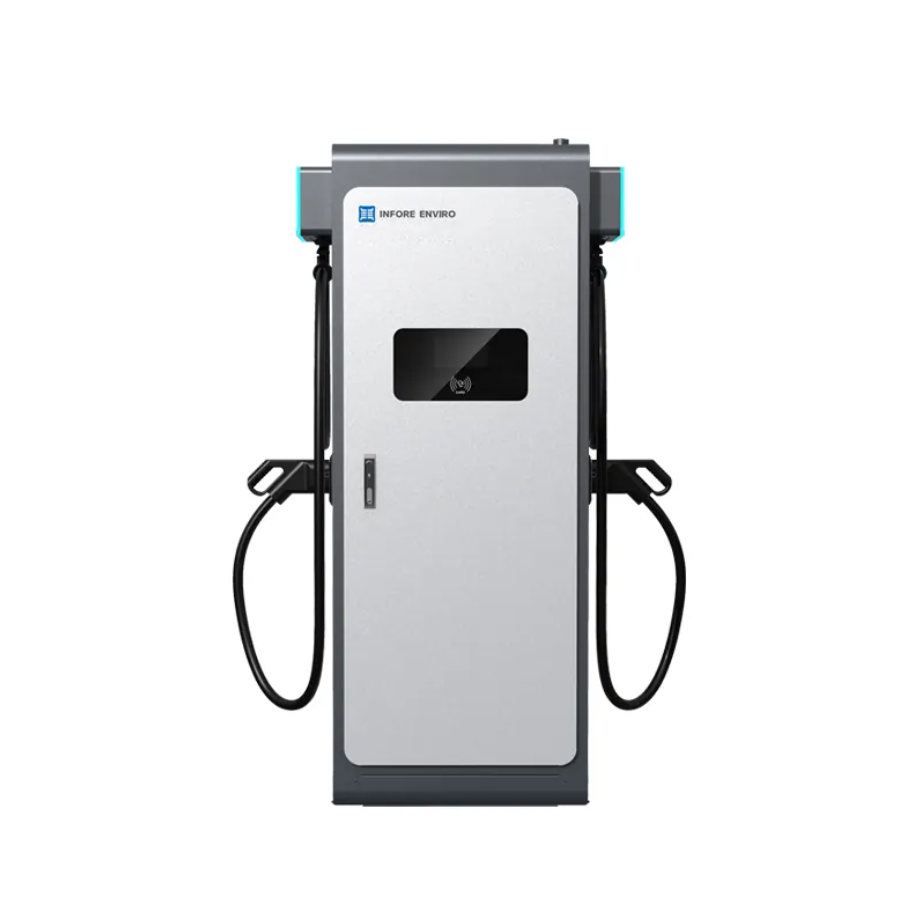
A relevant example is the 160kW DC High Power Charging Station supplied by INFORE ENVIRO. The floor-standing charger uses two CCS2 charging guns and is designed for public and commercial scenarios such as fleet depots, logistics hubs, and airport charging areas.
The unit includes a 7-inch LCD screen and supports OCPP 1.6J for charger management and platform communication. It has an IP54 protection rating and carries CE and RoHS certifications. These details are useful for European projects that need equipment aligned with EU connector and compliance requirements.
Product selection should still be based on site demand. Dual-gun capability can improve flexibility, but project teams should also review parking layout, simultaneous charging demand, and how power is distributed between connected vehicles.
OCPP Matters for Fleet Management
Hardware is only one part of commercial charging. Fleet operators also need visibility into charger status, energy use, charging sessions, and equipment availability. This is where management communication becomes important.
OCPP is commonly used to connect chargers with charging management platforms. Equipment that supports OCPP 1.6J can exchange operational data with compatible backend systems, helping operators monitor charging activity and manage multiple chargers from one platform.
For fleets with several depots or charging points, this connection can support organized operation. Charging events and equipment status can also be reviewed through the management system.
When selecting a Level 3 DC fast charger, fleet teams should also review software compatibility. Charging speed matters, but communication capability affects how the site is managed over time.
Compliance and Protection Should Not Be Minor Details
Commercial charging equipment often operates in busy environments and may be installed outdoors. Protection against dust and water therefore has practical value for long-term use.
The 160kW model introduced by INFORE ENVIRO has an IP54 rating, which supports installation where dust and water exposure need to be considered. Its CCS2 configuration, CE certification, and RoHS compliance also match common requirements for European charging projects.
For procurement teams, certification review should happen before purchase. Connector type, electrical standard, environmental protection, communication protocol, and installation conditions should all be checked against local project requirements.
A DC fast charger Level 3 project is easier to plan when technical compliance is treated as part of early equipment selection rather than a final documentation step.
Practical Charging Decisions Start with Operating Data
Commercial fleet electrification is not simply a race for higher charging power. Fast charging can be useful for vehicles with tight schedules, high daily mileage, and limited dwell time, but its value depends on how well the equipment fits the operating model.
Fleet operators can make stronger decisions by reviewing route patterns, charging windows, vehicle limits, site power, connector standards, communication needs, and future expansion together. Level 3 charging then becomes a practical tool rather than an assumed answer to every fleet charging challenge.
