Formulating modern personal care and household cleaning products requires balancing powerful detergency with skin-friendly properties. To achieve this, the chemical industry frequently relies on ethoxylated surfactants. While these components deliver excellent foaming characteristics, the ethoxylation process inherently produces trace amounts of 1,4-dioxane as a byproduct.
Because regulatory bodies increasingly classify this compound as a substance of concern, controlling its presence has become a priority. Formulators must navigate tightening regional restrictions while maintaining product efficacy. Addressing this complex challenge requires partnering with an advanced sles supplier capable of deploying sophisticated purification technologies. By understanding the mitigation strategies employed during large-scale synthesis, commercial buyers can make informed procurement decisions.
With extensive industrial expertise, Zanyu implements rigorous processing controls to effectively manage trace impurities, providing downstream consumer brands with highly compliant raw materials.
The Chemical Origins of Trace Impurities
The formation of 1,4-dioxane is tied to the foundational steps of surfactant synthesis. During ethoxylation, ethylene oxide reacts with fatty alcohols to improve the compound’s water solubility and temper its harshness. Under specific thermodynamic conditions, existing glycol oligomers can undergo side reactions during the subsequent sulfation phase.
When the ethoxylated fatty alcohol reacts with sulfur trioxide in a falling film reactor, diethylene glycol monosulfate can form and eventually break down into 1,4-dioxane. Because this sequence is an inherent part of creating the active agent, completely preventing its initial formation is chemically complex. Therefore, the responsibility falls upon capable sodium lauryl ether sulfate manufacturers to engineer robust post-reaction purification methods and tightly calibrate their synthesis environments.
Through careful manipulation of temperature profiles, catalyst concentrations, and reaction times, facilities aim to minimize the initial generation of these unwanted precursors before the product moves to final refinement.
Vacuum Stripping Technologies for Impurity Extraction
Once the primary sulfation and neutralization reactions are complete, industrial facilities extract residual impurities from the viscous surfactant paste. The most established technique utilized across the sector is vacuum steam stripping. This physical separation method exploits the different boiling points of the chemical components. The surfactant mixture is subjected to high temperatures under a deep vacuum environment, causing the volatile 1,4-dioxane to vaporize while the heavier active cleaning agents remain intact.
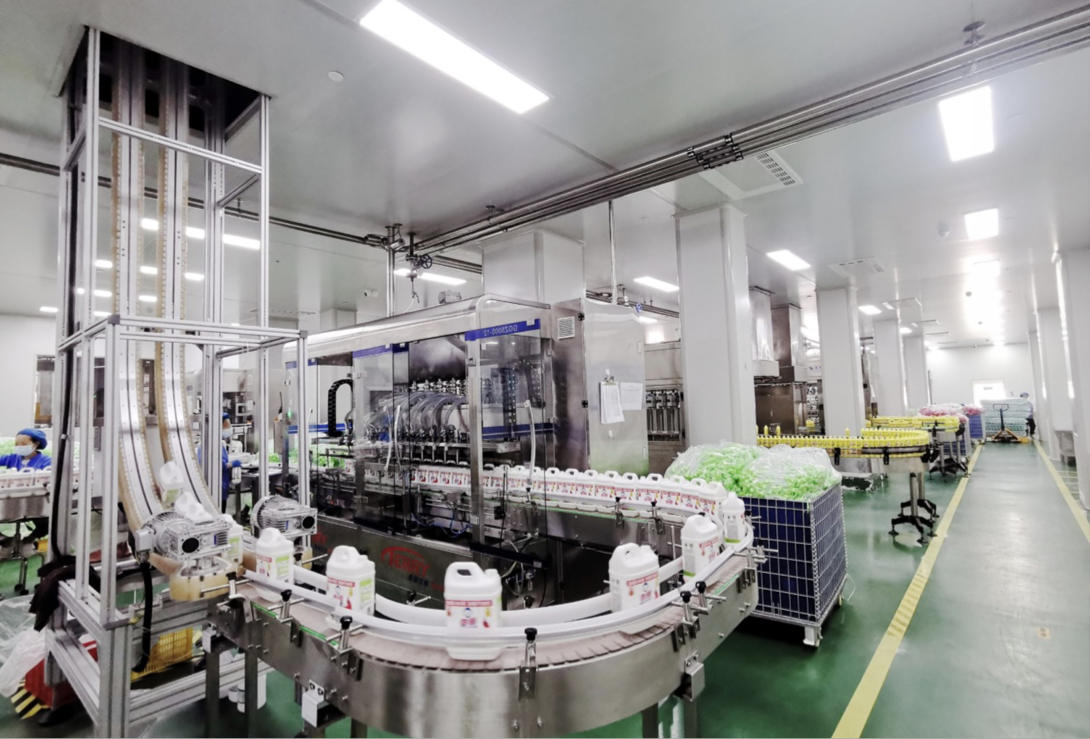
Steam is injected into the system to act as a carrier gas, helping to sweep the vaporized impurities away from the main product stream. Operating a vacuum stripping column requires significant energy investment and precise mechanical engineering to prevent thermal degradation of the primary surfactant. For buyers, the key consideration is whether the supplied SLES meets the required 1,4-dioxane specification for the intended formulation and market. Their extensive facilities handle continuous high-volume processing while extracting volatile byproducts, ensuring bulk material meets stringent purity thresholds.
Process Optimization by Sodium Lauryl Ether Sulfate Manufacturers
Beyond post-reaction extraction, mitigating impurities involves comprehensive oversight of the entire manufacturing lifecycle. High-quality production demands precise control over the raw material feedstocks, particularly the quality of the starting fatty alcohol ethoxylates. If precursor materials contain excessive unreacted glycols, the likelihood of 1,4-dioxane formation during sulfation increases exponentially.
Leading sodium lauryl ether sulfate manufacturers employ continuous online monitoring systems to track the exact chemical composition of materials moving through the reactor network. Parameters such as sulfur trioxide gas concentration and neutralization pH are carefully balanced. By maintaining ISO 9001 and ISO 14001 certified environmental and quality management systems, Zanyu’s published SLES
specifications list 1,4-dioxane at ≤30 ppm for both its 28% and 70% active-matter
grades.
Navigating Global Regulatory Landscapes
The regulatory environment surrounding trace chemicals is fragmented, with different jurisdictions enforcing distinct allowable limits. The European Union typically adopts a risk-based approach, establishing safe threshold levels for trace impurities in cosmetic applications. Conversely, certain regions in North America have enacted highly restrictive legislation demanding lower parts-per-million limits for finished household goods. A versatile SLES supplier addresses this by offering tiered product specifications, providing standard grades for markets with traditional regulations and highly purified, low-dioxane grades for heavily restricted regions.
Zanyu offers flexibility in its catalog, ensuring bulk buyers select raw materials that align precisely with their target market’s compliance requirements. This operational adaptability helps formulators avoid costly product recalls and maintain consumer trust in highly scrutinized retail markets worldwide.
Sourcing Strategies for Compliant Formulations
Developing high-performance cleaning agents in a heavily regulated market necessitates careful supply chain management. Brands can no longer view commodity surfactants solely through the lens of cost and active matter concentration; they must evaluate the technical capabilities of their chemical partners. Selecting a manufacturing partner equipped with modern vacuum stripping columns, robust analytical laboratories, and strict process controls is vital for long-term commercial viability. A dedicated sles supplier provides more than just raw materials; they provide regulatory security and formulation stability.
By leveraging highly controlled synthesis pathways and advanced purification techniques, Zanyu delivers the fundamental chemical ingredients powering the modern household care sector. Their commitment to managing trace impurities enables downstream commercial buyers to confidently innovate, scale their product lines, and meet the rising safety expectations of global consumers without compromising on cleaning efficacy.
