Managing blood glucose at home often involves routines that appear simple but require careful attention to device handling, skin condition, sample quality, and user comfort. For family caregivers, the choice of disposable safety lancet can influence how consistently fingerstick testing is performed, particularly when another person needs assistance with positioning, activation, or disposal.
Home users may also have different fingertip sensitivity, skin thickness, and levels of familiarity with blood sampling. Rather than focusing on one specification alone, practical evaluation should consider activation method, puncture control, handling stability, hygiene, and compatibility with the user’s daily routine. Against this broader background, SteriLance provides safety-lancet designs intended for capillary blood collection, offering another reference point for understanding what matters during repeated home testing.
Activation Design And Handling
Activation method has a direct relationship with how easily a caregiver can control a sampling procedure. Finger placement needs to remain stable before activation, while the device should respond in a predictable manner without requiring complicated movements. Such characteristics become particularly relevant when caregivers assist older adults or people who have difficulty maintaining steady hand positions.
Pull-cap mechanisms can also affect preparation. Removing the protective cap before use separates the preparation step from activation, allowing the user to visually identify the ready-to-use state. This distinction may be useful during busy household routines because the caregiver can prepare the device while keeping attention on the testing sequence.
Hand dominance deserves consideration as well. Some users naturally apply pressure with one hand while positioning the fingertip with the other, whereas caregivers may need to coordinate both hands around another person. A disposable safety lancet with an intuitive activation sequence can reduce unnecessary handling movements and make the procedure easier to reproduce from one test to another.
Puncture Depth And Sampling Needs
Skin thickness varies considerably between individuals and even between different fingers of the same person. Age, skin condition, hydration, and repeated testing may all affect the way a fingertip responds to puncture. Consequently, puncture depth should be assessed alongside blood-volume requirements rather than treated as an isolated specification.
Too shallow a puncture may produce an insufficient sample, while excessive penetration can contribute to discomfort or local irritation. Home users therefore benefit from understanding the relationship between device specifications and their own testing routine. Caregivers can pay attention to whether the selected configuration consistently provides an adequate sample without encouraging excessive squeezing.
Needle gauge represents another technical consideration. Smaller gauge numbers generally indicate thicker needles, while higher gauge numbers indicate finer needles. The appropriate choice depends on the device design and intended application, so comparing gauge alone may provide an incomplete picture of sampling performance.
Comfort And User Confidence
Repeated fingerstick testing can become stressful if the user anticipates discomfort each time. Confidence often develops through predictable procedures: the fingertip is positioned consistently, activation occurs without unnecessary hesitation, and the used device is discarded immediately afterward.
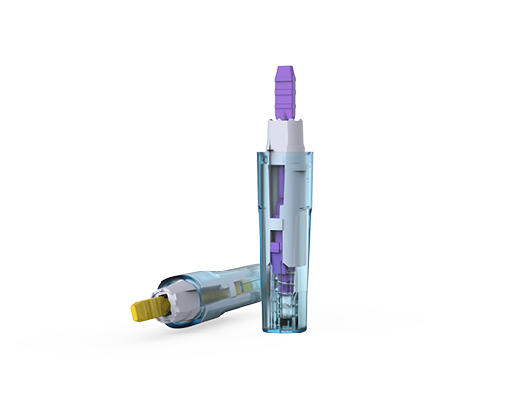
SteriLance’s ImPress series illustrates how activation design can be incorporated into everyday blood glucose checks. ImPress Max uses a pull-cap design and is optimized for one-handed use, giving caregivers and home users a practical example of how preparation and activation can be integrated into routine testing. Its relevance lies less in branding than in the broader principle that device operation should match the physical abilities and habits of the intended user.
Comfort should also be considered over repeated use rather than judged from one isolated test. If a user experiences recurring soreness, changes the puncture location, or applies excessive pressure to obtain blood, the sampling routine may need reassessment. Finger rotation, appropriate hand preparation, and consistent technique can contribute to a more comfortable experience.
Hygiene, Disposal And Daily Routine
Single-use design plays an important role in household blood sampling because the same puncture device should not be repeatedly used between tests or shared between people. Once sampling has occurred, the used device needs to be handled as a sharps item according to applicable local disposal practices.
Packaging can influence usability as well. Clear identification of product information, lot details, and expiration information helps caregivers manage supplies and recognize whether a device is suitable for use. Storage conditions also deserve attention, since excessive heat, moisture, or damage to packaging may affect the condition of medical devices.
Routine organization can make testing more consistent. Keeping unused devices in an appropriate location, preparing the testing area before puncture, and disposing of each used device immediately can reduce unnecessary contact and interruptions. Such habits matter particularly in households where several people may assist with glucose monitoring.
Conclusion
Selecting equipment for home blood sampling requires more than comparing needle gauge or puncture depth. Activation style, grip stability, user sensitivity, sampling requirements, packaging, and sharps disposal all contribute to the practical experience. Family caregivers may place greater emphasis on ease of handling and predictable operation, while independent users may value portability and straightforward preparation.
A well-considered disposable safety lancet should therefore be evaluated according to the complete testing routine rather than one isolated feature. With these principles in mind, SteriLance serves as one example of how medical-device design can address practical requirements in everyday capillary blood collection, while informed users can make decisions based on safety, usability, and individual testing needs.
Disclaimer: This content is provided for general health education and informational purposes only. It does not constitute medical advice, diagnosis, or treatment. Individual health conditions vary, and no health education article can replace a face-to-face consultation with a qualified healthcare professional or licensed medical institution. If you have specific health concerns or feel unwell, please seek care from a licensed medical facility and do not delay treatment because of content on this platform.
