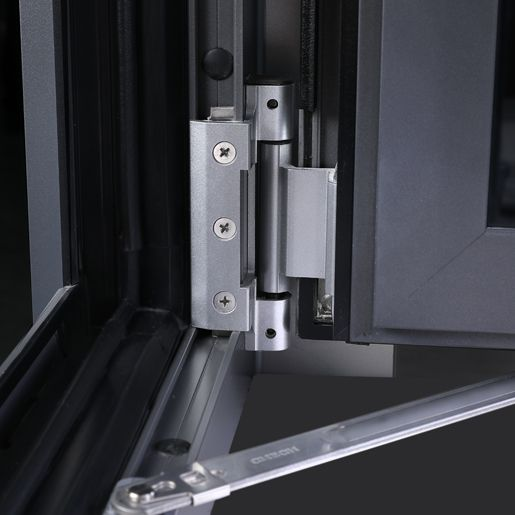
Replacing window hardware can seem straightforward until a new handle, lock, or hinge fails to fit the existing frame. Differences in opening direction, sash dimensions, mounting positions, and operating mechanisms can make apparently similar components incompatible. For homeowners, window fabricators, and renovation professionals, successful replacement begins with identifying the window system rather than choosing parts by appearance alone. CMECH provides hardware for multiple window configurations, offering a useful starting point for understanding how component compatibility affects the selection process.
Identify the Window Type Before Buying Replacement Parts
The first step in selecting window replacement hardware is identifying how the window opens. Sliding windows, outward-opening casement windows, and awning windows use different operating arrangements, so their components should not be treated as interchangeable.
Sliding windows move horizontally along a track. Their hardware may include handles, locking components, drive parts, and rollers. A replacement handle must suit the locking mechanism and available mounting space, while the supporting components must match the sash configuration.
Casement windows operate on hinges, making hinge position, opening direction, and locking arrangements important when selecting replacement parts. Awning windows also use hinged movement, but their hardware requirements can differ according to the sash design and intended opening configuration.
CMECH organizes its window products around specific applications, including sliding windows, outswing casement windows, and outswing awning windows. Identifying the closest matching configuration helps narrow the search before individual components are evaluated.
Measure the Frame and Check Component Compatibility
Measurements help determine whether replacement hardware can fit the existing window without unnecessary modifications. Before ordering parts, record the sash width and height, handle position, mounting-hole spacing, and available clearance. For hinged windows, also examine the hinge arrangement and the space available for locking components.
However, matching dimensions alone does not guarantee compatibility. Two windows with similar measurements may use different transmission mechanisms, locking points, or frame grooves. A handle that fits the mounting area may still fail to operate the existing lock correctly.
CMECH’s published specifications illustrate why application-specific measurements matter. Its sliding window hardware solution covers sash widths of 500–1,600 mm and sash heights of 300–1,800 mm, with a listed load-bearing limit of up to 300 kg. Its outswing casement window hardware solution specifies sash widths of 300–750 mm, sash heights of 300–1,800 mm, and a load-bearing limit of up to 70 kg.
These figures apply to their respective product configurations and should not be treated as universal limits for all windows. Comparing the existing window against the relevant system specifications is more useful than relying on a general description such as standard-size hardware.
Match the Hardware to the Frame and Operating System
Frame construction affects how hardware is mounted and how moving components engage. The position of a groove, the depth available for a mechanism, and the location of fixing points can all influence whether a replacement part is suitable.
CMECH’s window hardware range includes products designed for different window applications. For example, its outswing awning window hardware solution offers C-groove and K-groove friction hinge versions. This distinction matters when matching hinge components to the frame profile.
The same solution includes a multipoint locking mechanism, while its sliding window hardware solution combines components intended for sliding operation. These examples show why replacing one part without considering the surrounding mechanism can create problems.
When assessing window replacement hardware, identify whether the existing components form part of an integrated system. If they do, replacing several connected components may require a more comprehensive compatibility check than replacing a standalone handle. Where the original system cannot be identified, the window manufacturer or a qualified installer may help establish the correct configuration.
Consider Performance Requirements, Not Just Appearance
A replacement component should support the window’s intended operation as well as fit physically. Handles, hinges, locks, and rollers each perform different functions, and their suitability depends on the window design.
For sliding windows, smooth movement depends partly on the rollers and the alignment of the sash with its track. CMECH’s sliding window hardware solution lists rollers with load capacities ranging from 120 kg to 300 kg, depending on the selected option. The solution also specifies sash dimensions and an overall load-bearing limit, which should be considered alongside the requirements of the actual window.
For outswing awning windows, CMECH lists a friction hinge made from 304 stainless steel and a multipoint locking mechanism. Its published specifications include sash widths and heights from 400 mm to 2,000 mm, with a load-bearing limit of up to 130 kg.
These specifications demonstrate that component selection must account for the complete configuration. A higher load capacity does not automatically make a component suitable for every frame, and material descriptions alone do not establish compatibility. Buyers should compare the relevant system requirements before choosing replacement parts.
When to Replace Individual Parts or a Complete Solution
Not every hardware problem requires a complete system replacement. A loose handle, damaged hinge, or worn roller may call for an individual replacement if the remaining components are compatible and in suitable condition. However, repeated operating problems may indicate misalignment, wear across several components, or a mismatch between the hardware and the window.
Before deciding, inspect the mounting points, frame condition, moving parts, and locking mechanism. Confirm whether the problem originates in one component or affects the broader operating system. For older windows, also check whether replacement parts remain compatible with the installed configuration.
CMECH offers window replacement hardware for different window applications, alongside integrated hardware solutions. Its product range gives project teams a basis for comparing system-specific options, but the appropriate choice still depends on the existing frame and operating requirements.
The distinction between a Solution and a Series is also important when researching products. A Solution describes an overall hardware system for a particular window or door configuration, while a Series identifies an individual product line. Understanding this distinction helps buyers communicate their requirements more precisely when discussing replacement components.
Conclusion
Finding compatible window replacement hardware requires more than matching the shape or finish of an existing part. Window type, sash dimensions, frame grooves, mounting positions, and operating mechanisms all influence the selection process. CMECH provides hardware solutions for different window configurations, with published specifications that help buyers assess relevant applications. By identifying the existing system, checking measurements, and confirming component compatibility, property owners and professionals can make more informed replacement decisions and reduce the risk of selecting unsuitable parts.
