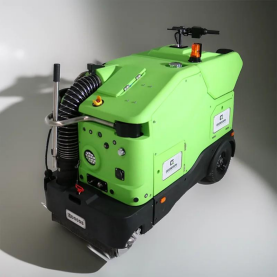
As labor costs continue to rise and facility managers face increasing pressure to maintain high cleaning standards, autonomous cleaning technology is becoming a practical solution for many commercial and industrial environments. From logistics centers and industrial parks to campuses and transportation hubs, organizations are exploring how a robot floor cleaner can improve efficiency while reducing reliance on manual cleaning processes.
However, not all robotic cleaning equipment is designed for the same purpose. Different types of robotic floor scrubber systems are available to address varying operational requirements, cleaning environments, and budget considerations. Understanding these categories can help buyers select equipment that aligns with their facility management goals.
Fully Autonomous Floor Scrubber Robots
Fully autonomous cleaning robots are designed to perform cleaning tasks with minimal human intervention. These systems typically use advanced navigation technologies, including LiDAR, cameras, and obstacle detection sensors, to map environments and execute cleaning routes automatically.
A fully autonomous robot floor cleaner is particularly suitable for large facilities where routine cleaning must be performed consistently across extensive areas. Once routes are configured, the machine can clean, avoid obstacles, and in many cases return to its charging station automatically.
According to research on autonomous cleaning systems, multi-sensor navigation technology allows robots to detect both static and dynamic obstacles while maintaining efficient cleaning performance in public and industrial environments.
One example is the Greendorph YJ130 autonomous outdoor sweeper. According to official specifications, the YJ130 uses multi-line LiDAR, 3D cameras, and ultrasonic sensors for navigation and obstacle avoidance. The machine provides a cleaning width of 130 cm and approximately 5,760 m² of cleaning coverage per hour while operating for 6–8 hours on a single charge.
For organizations managing industrial parks, campuses, public walkways, and transportation facilities, this type of robotic floor scrubber can help automate repetitive cleaning tasks while maintaining operational consistency.
Semi-Autonomous Follow-Me Cleaning Robots
Not every facility requires a fully autonomous solution. Some environments benefit from a combination of automation and human supervision.
Semi-autonomous cleaning robots typically include multiple operating modes, allowing operators to guide the machine while still benefiting from automated cleaning functions. One popular configuration is the “follow-me” mode, where the robot automatically follows an operator while performing cleaning tasks.
This approach is particularly useful in environments with changing layouts, crowded public spaces, or areas requiring more flexible cleaning strategies.
According to the official Greendorph product portfolio, the YJ80 series includes manual ride-on operation, auto-follow mode, and towed traction mode. These multiple operating options allow cleaning teams to adapt the equipment to different working environments while maintaining productivity.
For organizations transitioning toward automation, a semi-autonomous robot floor cleaner can provide an effective balance between operator control and labor efficiency.
Sweeping Robots For Outdoor Applications
Another major category is robotic sweepers designed for outdoor cleaning. Unlike indoor floor scrubbers, these machines are built to handle leaves, dust, debris, and litter in environments such as parks, campuses, industrial roads, residential communities, and public walkways.
Outdoor robotic cleaning systems often incorporate additional features such as water spraying, dust suppression, suction systems, and larger debris collection bins. These capabilities help maintain outdoor environments while reducing manual sweeping requirements.
The Greendorph YJ130 represents this category. The machine combines sweeping, suction, airflow assistance, and misting functions within a fully autonomous platform. Official product information indicates that it achieves over 95% cleaning efficiency and supports automatic charging, automatic water filling, and automatic garbage dumping.
For facilities with extensive outdoor areas, this type of robotic floor scrubber offers an alternative to traditional manual cleaning methods.
Multi-Function Cleaning Robots
Many modern cleaning robots integrate multiple functions into a single machine, including sweeping, vacuuming, washing, debris blowing, and water spraying. This versatility helps organizations reduce the need for multiple specialized machines while improving maintenance efficiency.
The Greendorph YJ80 series is an example of a multi-functional cleaning platform. According to official specifications, the machine combines sweeping, vacuuming, blowing, water spraying, and high-pressure washing capabilities. The YJ80 also offers a cleaning width of up to 140 cm and a cleaning efficiency of approximately 10,800 m² per hour. It operates for approximately 6–8 hours using a 48V/300AH lithium battery.
For cleaning contractors and property management companies, a multi-function robot floor cleaner can provide greater operational flexibility across multiple cleaning scenarios.
Choosing The Right Robotic Floor Scrubber For Your Facility
Selecting the right robotic floor scrubber depends on several factors, including facility size, cleaning frequency, labor availability, and environmental conditions.
Organizations should evaluate:
Indoor versus outdoor cleaning requirements
Required cleaning coverage per day
Level of autonomy needed
Debris types encountered
Available labor resources
Maintenance and support requirements
Facilities with large outdoor areas may benefit from a fully autonomous cleaning robot capable of operating independently throughout the day. Meanwhile, locations with complex layouts or variable cleaning needs may find semi-autonomous or multi-functional systems more appropriate.
Greendorph offers both fully autonomous and semi-autonomous solutions, allowing organizations to select equipment that matches their operational objectives. The company serves a range of applications including industrial parks, campuses, warehouses, residential communities, parks, and transportation hubs.
Conclusion
The autonomous cleaning equipment market includes a range of solutions, from fully autonomous outdoor sweepers to multi-function cleaning robots. As automation adoption grows, a robot floor cleaner can help organizations improve efficiency, address labor challenges, and maintain consistent cleaning standards, making it important to select equipment that best matches specific operational needs.
Solutions from Greendorph demonstrate how autonomous and semi-autonomous cleaning technologies can support modern facility management through intelligent navigation, efficient cleaning performance, and adaptable operating modes.
