Urban water utilities face growing pressure to modernize infrastructure while maintaining reliable daily services. However, digital transformation becomes difficult when underground pipelines lack complete documentation and essential equipment has operated for decades. These challenges affect data quality, asset visibility, maintenance planning, and coordination between departments. For municipalities, engineering contractors, and water operators, successful modernization requires more than installing sensors or software; it also requires addressing the limitations of existing infrastructure and records.
Missing Pipeline Documentation Creates Digital Blind Spots
Many urban water networks developed over several generations. Construction drawings, repair reports, and equipment inventories may be scattered across departments, stored in outdated formats, or missing entirely. A 2026 review in the *Journal of Pipeline Systems Engineering and Practice* highlights how incomplete historical information complicates the creation of reliable pipeline inventories and effective asset management.
Without dependable records, operators may struggle to establish pipe materials, installation dates, diameters, connection points, and previous repair locations. These details influence decisions about inspection priorities, rehabilitation methods, and replacement budgets. When information remains fragmented, teams must spend additional time checking records or conducting field investigations before making infrastructure decisions.
This creates a fundamental challenge for smart water management solutions. A digital map can display pipeline locations, but its usefulness depends on the accuracy and completeness of the underlying information. Missing attributes or outdated drawings can create discrepancies between the digital representation and actual underground conditions.
Utilities can address these gaps progressively. Historical drawings, geographic information system (GIS) data, maintenance logs, and field survey results can be consolidated into a common asset inventory. Records should also identify uncertain information rather than presenting unverified details as established facts. This approach provides a more dependable foundation for subsequent digital upgrades.
Aging Equipment Complicates Data Integration
Legacy water infrastructure often includes pumps, valves, meters, control panels, and monitoring devices installed at different times. Some equipment may lack modern communication interfaces, while other devices use proprietary protocols or operate through separate control systems. Consequently, collecting consistent operational data across the network can require substantial integration work.
Older equipment also presents maintenance challenges. Spare parts may become difficult to obtain, technical documentation may be incomplete, and operating conditions can change as components wear. These factors complicate efforts to interpret equipment readings and distinguish routine variations from conditions requiring inspection.
For water utilities, modernization therefore involves both physical and digital considerations. Replacing every legacy component at once may be financially impractical or disruptive to essential services. A phased strategy can prioritize critical facilities, introduce compatible monitoring equipment where appropriate, and connect existing systems when technical conditions permit.
A practical water management solution should account for these constraints instead of assuming that every asset can immediately provide standardized digital information. Before deployment, project teams need to assess device compatibility, available interfaces, communication reliability, and the quality of existing operational records.
Why Data Fragmentation Limits Operational Visibility
Even when pipeline records and equipment data are available, they may remain separated across GIS platforms, maintenance databases, control systems, and spreadsheets. Different departments can consequently work with different versions of the same asset information.
This separation affects more than convenience. When a pressure fluctuation or equipment alert occurs, staff may need to identify the affected location, retrieve maintenance history, and contact another team for additional context. Delays can arise when information is difficult to access or when asset identifiers differ between systems.
Digital twins offer one approach to bringing spatial and operational information into a shared environment. By linking physical assets with digital representations and connected data, utilities can examine infrastructure locations alongside relevant equipment status and maintenance records. However, the value of this approach depends on reliable data connections, appropriate update frequencies, and ongoing record maintenance.
How Digital Twins Support Smarter Water Infrastructure Management
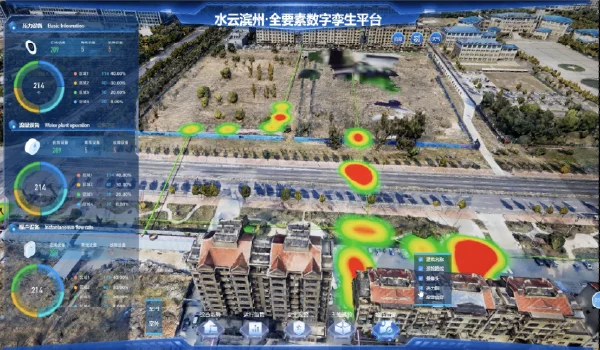
Icecypress Technology provides a digital-twin-powered platform designed to bring water infrastructure information into a common operational view. Its capabilities include switching between two-dimensional pipeline maps and three-dimensional models while retaining linked asset attributes. Users can also access available current and historical data, together with maintenance records, through the spatial interface.
The platform presents underground utility tunnels through overview, structural, and cross-sectional views. Connected equipment status and color-coded pressure indicators help teams examine relevant conditions within the digital environment. These functions can be useful when operators need to relate infrastructure locations to available operational information.
Equipment management features organize assets by facility zone and category, with access to operating status, historical data, and maintenance records. Configured machine-learning models can flag potential abnormalities in connected operational data. Alert management supports filtering by configured conditions and severity, with notifications through supported channels such as SMS, email, and mobile applications.
These capabilities illustrate how smart water management solutions can improve access to dispersed information without eliminating the need for field verification. The platform’s usefulness in a legacy environment will depend on the quality of imported records, the availability of connected equipment data, and the configuration of relevant integrations.
A Practical Roadmap for Legacy Water-System Modernization
Utilities should begin with an assessment of existing assets, documentation, communication interfaces, and operational priorities. Establishing a baseline helps project teams identify critical information gaps and determine which facilities would benefit most from initial upgrades.
The next step is to standardize asset identifiers and organize records into a maintainable inventory. Where documentation is incomplete, field surveys and inspection findings can gradually improve the information available to engineers. Data ownership and update procedures should also be defined so that subsequent repairs and equipment changes are reflected in the system.
Implementation can then proceed in manageable stages, starting with priority pipelines, pumping stations, or utility tunnels. Integration testing should examine data accuracy, connectivity, alert configuration, and access permissions before wider deployment. Staff training and routine data reviews are equally important for maintaining operational consistency.
For municipalities and engineering partners, a suitable water management solution should align with existing infrastructure, available budgets, technical resources, and long-term asset-management objectives.
Building a Reliable Foundation for Urban Water Digitalization
Legacy pipeline networks and aging equipment do not make digital transformation impossible, but they introduce practical constraints that technology alone cannot resolve. Better documentation, consistent asset records, and carefully planned system integration are essential starting points.
Icecypress Technology offers digital-twin visualization, equipment monitoring, and alert-management capabilities relevant to these challenges. By combining such tools with disciplined data improvement and phased infrastructure upgrades, utilities can develop a clearer operational view of existing networks while progressing toward more coordinated water management.
