In competitive hardware markets, being first to launch often matters as much as building the best product. Yet many embedded projects lose months before a single unit reaches a customer, not because the technology is unproven, but because the underlying hardware still needs to be designed, validated, and certified from the ground up.
The Real Cost of Building Hardware From Scratch
A fully custom embedded board requires schematic design, layout, prototyping, and multiple rounds of testing before it can be trusted in a commercial product. Each of these stages consumes engineering time and introduces risk, since a flaw discovered late in validation can send the entire design back several steps.
For manufacturers working against a product launch deadline, this uncertainty is costly. Every additional respin delays revenue and gives competitors more room to establish market position first. The traditional approach of designing every board from zero simply cannot keep pace with how quickly product requirements now shift.
Why Pre-Validated Platforms Shorten Development Cycles
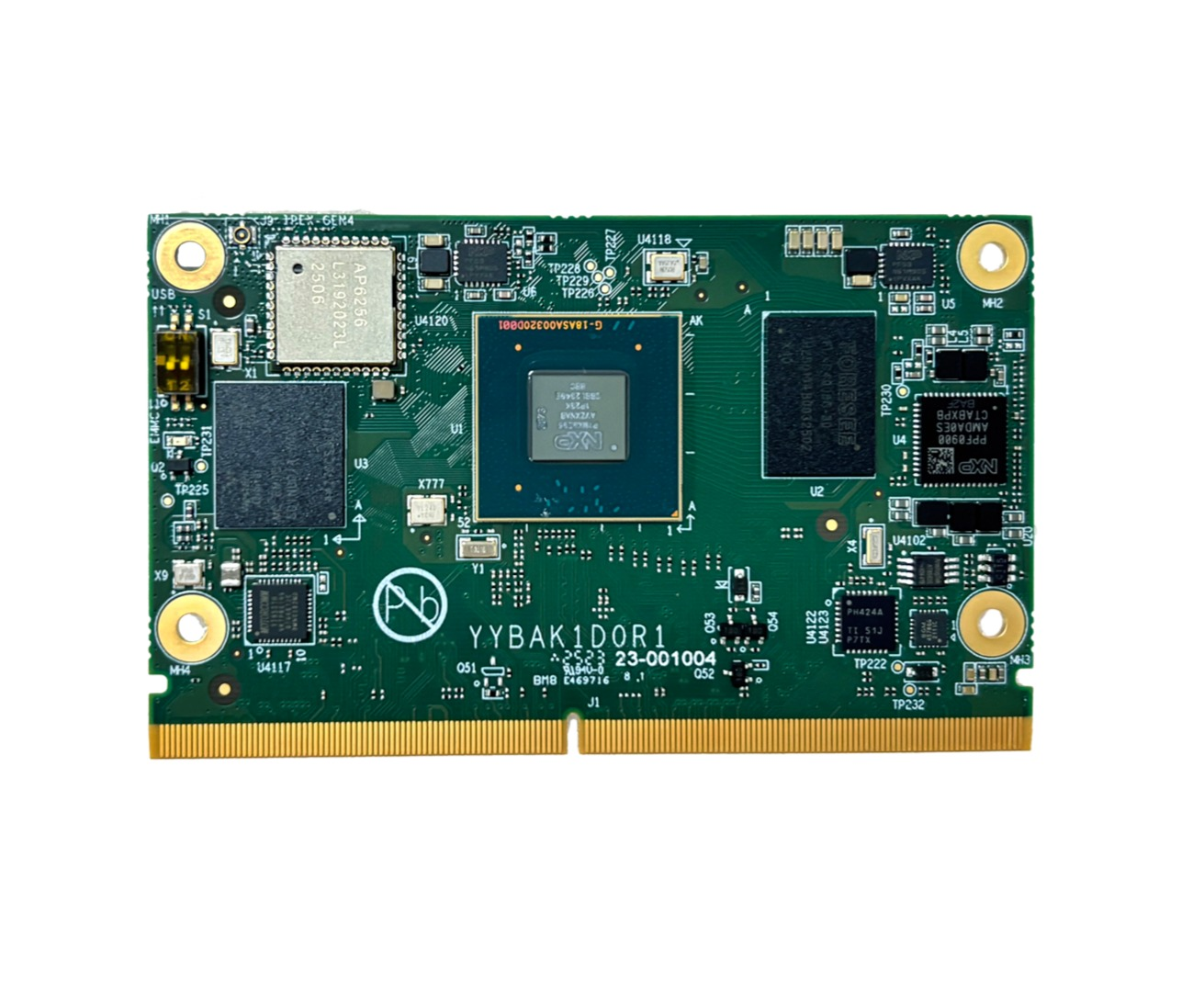
A SoM module solves this problem by isolating the processor, memory, and power management onto a pre-engineered, pre-tested platform. Because the module integrates and validates part of the processor subsystem, engineering teams can focus more of their effort on the carrier board, software, enclosure, and system-level validation.
This division of labor also reduces risk. Instead of validating an entire system from scratch, teams inherit a compute core that has already proven itself across other deployments.This can shorten the path from concept to a working prototype compared with a fully custom processor design.
Choosing the Right System on Module for a Faster Launch
Selecting an appropriate System on Module is not simply about matching a processor to performance requirements. Manufacturers also need to consider driver maturity, carrier board reference designs, and long-term supply commitments, since gaps in any of these areas can quietly erode the time savings the module was meant to provide.
A well-supported module comes with documentation and reference designs that shortcut early-stage engineering decisions. Rather than starting integration work with unanswered questions about power sequencing or interface behavior, teams can begin from a validated baseline and focus their effort on the features that differentiate their product.
Faster Software Integration Through Ready-Made Drivers and BSPs
Hardware validation is only half the time-to-market equation. Software integration, including operating system porting, driver development, and peripheral testing, often consumes just as much engineering effort as the physical board design. Delays here are just as capable of pushing back a launch date.
Modules that ship with mature board support packages and pre-tested drivers remove much of this uncertainty. Engineering teams can boot an operating system, bring up peripherals, and begin application development almost immediately, rather than spending weeks debugging low-level driver issues that have already been solved elsewhere.
Scaling Product Lines Without Restarting the Design Process
Many manufacturers need more than a single product variant. A standardized module family allows the same carrier board to accept different processing tiers, so a lower-cost entry model and a higher-performance version can share nearly identical hardware architecture, cutting development time for each additional variant.
This approach also protects against future disruption. When a processor eventually reaches end-of-life, a pin-compatible successor module can often replace it without requiring a new carrier board design, which keeps existing product lines in production longer and avoids an unplanned re-engineering cycle.
Vantron’s Contribution to Faster Embedded Product Launches
Vantron designs its System-on-Module lineup with these time-to-market pressures directly in mind, offering SMARC, Q-Seven, COM Express, and Open Standard Module options across ARM and x86 platforms. Each module ships alongside carrier board reference designs, giving manufacturers a validated starting point rather than a blank layout.
Modules such as the VT-SBC-SMARC-IMX91 and VT-SBC-SMARC-IMX95 share the SMARC 2.1 form factor, which may reduce carrier-board changes when their pin assignments, interfaces, power requirements, and software are compatible. Combined with pre-tested drivers, board support packages, and direct FAE assistance, this lets engineering teams focus on application-specific features rather than low-level platform bring-up.
Vantron‘s long-lifecycle sourcing strategy adds a further advantage, since manufacturers can plan a product roadmap around stable component availability instead of racing to redesign hardware every time a processor is discontinued. For companies under pressure to launch quickly and sustain production for years afterward, that stability often matters as much as the initial development speed.
Time-to-market is rarely won through a single decision. It comes from removing unnecessary engineering work at every stage, from hardware validation through software integration to long-term production planning. For equipment manufacturers and system integrators facing shrinking launch windows, building on a proven, well-supported module platform has become less an optimization and more a competitive necessity, one that determines whether a product reaches customers on schedule or arrives after the opportunity has already passed.
