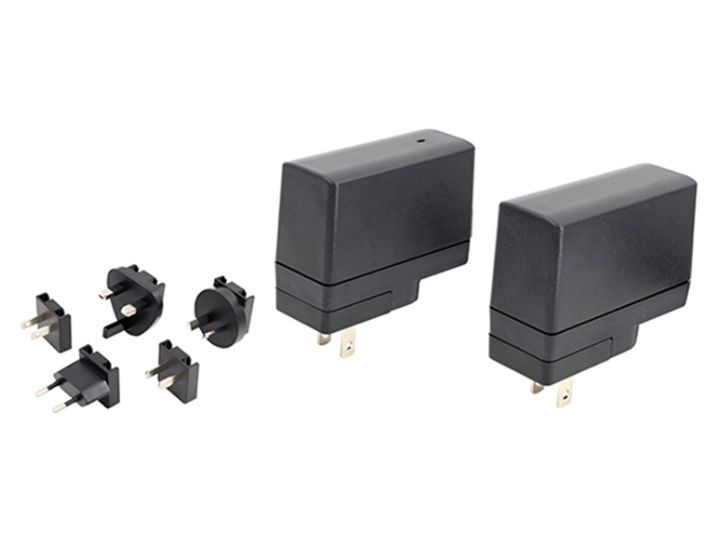
Medical devices are no longer limited to fixed locations. Patient monitoring systems, portable diagnostic equipment, laboratory instruments, and other electronic devices may need to move between treatment rooms, testing areas, temporary care spaces, and different departments. This mobility changes the requirements placed on the power system. A universal power supply adapter needs to provide stable conversion while remaining practical for repeated movement, different electrical environments, and changing equipment configurations. For medical equipment manufacturers, power design therefore becomes part of the product’s mobility strategy rather than simply a method of supplying electricity.
Mobility Changes the Way Medical Equipment Uses Power
A fixed medical device can be designed around one installation location and a predictable power connection. A movable device has fewer such limitations. It may be disconnected, transported, and connected again several times during its service life.
Each movement creates opportunities for power-related issues. Connectors can be repeatedly handled, cables can experience bending, and the equipment may be connected to different wall outlets. The power solution therefore needs to match the mechanical and electrical requirements of the complete device.
An external adapter can also reduce the amount of power conversion hardware that needs to be installed inside a portable enclosure. This can leave more internal space for processors, displays, batteries, sensors, and communication modules.
For designers, the objective is not simply to make the adapter smaller. The adapter, cable, connector, and equipment interface need to work together so that mobility does not introduce unnecessary installation or maintenance difficulties.
Why Stable AC-DC Conversion Matters During Movement
Moving equipment between locations does not necessarily mean that its electrical load changes dramatically, but the surrounding power conditions can vary. Input voltage, ambient temperature, and the quality of the electrical connection may differ between locations.
An external adapter converts AC input into regulated DC power for the equipment. Its input stage normally includes filtering and protection, followed by rectification and high-frequency switching. A transformer may provide isolation, while the output stage filters and regulates the converted energy.
Feedback control allows the adapter to respond to changes in load and maintain the specified output within its operating range. This is important for medical electronics because processors, displays, sensors, and communication circuits can respond differently to unstable power.
For mobile equipment, stable conversion helps maintain predictable operation after the device is moved from one location to another.
Battery Charging Adds Another Mobility Requirement
Battery-powered medical equipment has an additional power requirement. The adapter may need to provide energy for the equipment while also supporting battery charging.
A universal AC charger adapter can be useful in this type of application because it provides external AC-DC power and can support equipment charging systems when its electrical specifications match the device’s charging architecture. The charging system needs to provide suitable voltage and current according to the battery and the equipment’s charging architecture.
The UES12LCP-SPA/UES12LCP-SPC series supports 4V to 24V output options and power up to 12W. It can be used in applications involving external power and battery charging, while supporting interchangeable AC pin configurations.
This configuration can be useful for manufacturers developing equipment for different markets. Instead of designing completely different external power platforms, engineers can consider a compatible adapter structure with regional plug options.
Plug Flexibility Supports Different Medical Environments
Mobility is also connected to where the equipment is used. Medical products may be distributed across countries with different AC outlet standards. A fixed regional plug can make one equipment platform less convenient to deploy internationally.
Interchangeable AC pins provide another approach. The main adapter can remain consistent while the appropriate plug configuration is selected for the destination market.
This is especially useful for B2B manufacturers that develop one medical equipment platform for several regions. It can simplify product configuration and reduce unnecessary variation in external power components.
However, plug flexibility does not replace regional compliance. Manufacturers still need to verify the applicable electrical safety, EMC, and market requirements for the complete product.
Safety Becomes More Important When Equipment Is Portable
Portable equipment may be handled frequently and used close to patients or operators. Power safety therefore needs to be considered during the initial product design.
Isolation is one important factor. The transformer and insulation system in an isolated adapter provide electrical separation between input and output circuits. Engineers also need to consider leakage current, creepage and clearance distances, grounding, and protection against abnormal conditions.
The UES12LCP-SPA/UES12LCP-SPC series provides 2 MOPP isolation protection and supports BF-level medical device applications. It also includes short-circuit, over-voltage, and overload protection.
These functions are useful references when evaluating an external power solution, but final medical equipment compliance depends on the complete system. Enclosure design, cables, connectors, grounding, and internal circuits can all influence the final safety result.
EMC Can Affect Portable Equipment Performance
Medical equipment often combines several electronic functions in a relatively small enclosure. Wireless communication, displays, processors, sensors, and measurement circuits may operate close to the power system.
Switching power circuits can generate high-frequency electrical noise, so filtering, grounding, PCB layout, and cable routing need to be considered carefully. An EMC problem may become more visible after the adapter is connected to the final equipment rather than during standalone testing.
For mobile devices, this consideration is particularly important because the equipment may operate alongside other electronic systems in different environments.
EMC verification during development can help manufacturers identify interference risks before final certification. System-level testing is also valuable because the final result depends on how the power adapter interacts with the complete equipment.
Environmental Conditions Also Influence Mobility
Medical equipment may be used in different rooms, buildings, or geographical locations. Temperature and altitude can therefore become relevant power design factors.
The UES12LCP-SPA/UES12LCP-SPC series supports a working altitude of up to 5000 meters. It also specifies DOE Level VI efficiency and CoC V5 Tier 2 requirements, with standby power consumption of ≤0.075W.
For manufacturers, these specifications can help when defining the operating range of a portable product. However, the final equipment should still be evaluated under the actual environmental conditions expected during use.
How Should Manufacturers Select the Power Solution?
Power selection for mobile medical equipment should begin with the complete usage scenario. Engineers should identify whether the device will operate from AC power, battery power, or both. They should then determine output requirements, charging characteristics, connector design, cable length, operating temperature, and expected movement frequency.
Safety and EMC requirements should be reviewed alongside these electrical specifications. For international products, regional plug requirements should also be considered before the product structure is finalized.
A universal power supply adapter can provide a practical external power architecture when its electrical and mechanical characteristics match the equipment. UE Electronic develops external power solutions for medical, communication, and industrial applications, supporting B2B projects with different application requirements.
Conclusion
Medical device mobility depends on more than battery capacity or mechanical design. The external power system affects how easily equipment can be moved, connected, charged, and operated in different environments.
A universal AC charger adapter can provide regulated AC-DC power and regional plug flexibility, while its suitability for battery charging depends on the charging architecture of the connected equipment. When evaluating such products, manufacturers should consider isolation, leakage current, protection functions, EMC, environmental conditions, connector design, and charging requirements together.
A well-matched universal power supply adapter can provide a practical foundation for portable medical equipment by supporting consistent power performance while allowing greater flexibility in equipment deployment.
