Splash pad flooring is easy to choose on paper and hard to judge in use. Brochures describe traction, color, and durability, but only a wet, sunlit sample underfoot shows how a surface really performs. Jinchao approaches aquatic environments with the understanding that surface decisions affect both visitor experience and day-to-day facility management, and sample testing is the most direct way to make those decisions with evidence.
Decide What to Test Before Ordering Samples
A sample test is only useful if it answers specific questions. Traction should be checked wet and barefoot, on a slope and on level ground. Surface temperature should be measured in direct afternoon sun. Drainage should be observed by running water across the sample and noting how quickly puddles clear.
Wear and cleaning deserve a test too. Samples can be scrubbed with the cleaning products the facility actually uses, left outdoors for several weeks, and checked for fading, cracking, or residue. These simple trials show differences that supplier data sheets rarely make obvious.
Comfort is the last criterion. Staff and test visitors can walk, sit, and kneel on each sample to judge texture against bare skin. Recording scores for every sample in the same format makes it easier to compare options and to explain the final choice to the project team.
Match Materials to the Play Environment
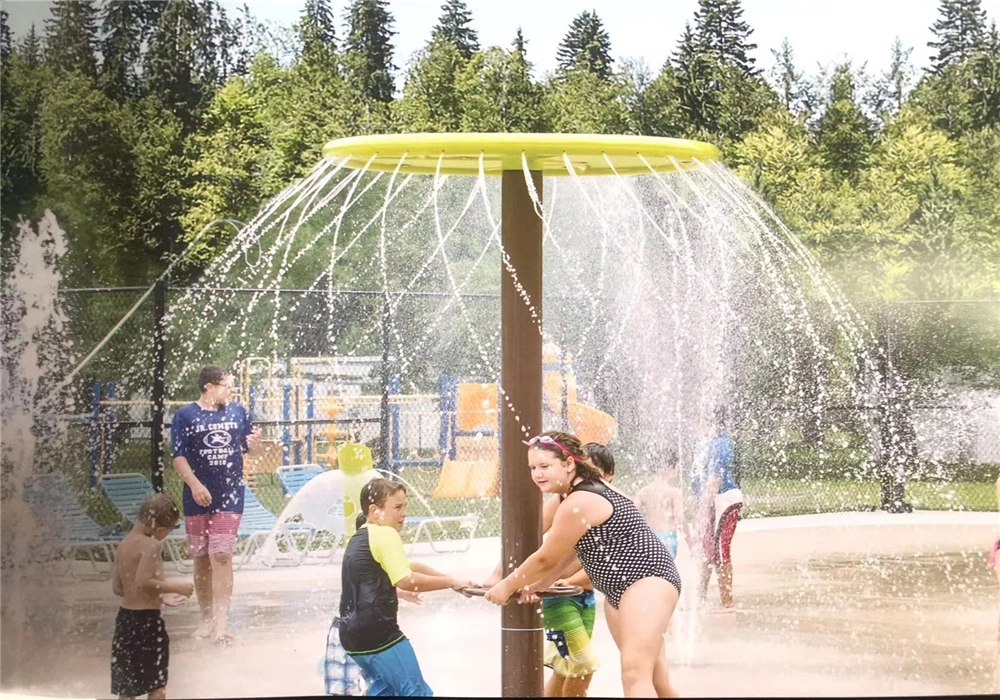
Material selection becomes more complicated once the type of play is considered. A quiet interactive zone may have different requirements from an area with rotating sprays, tipping features, or concentrated water jets. Jinchao’s Kids Aqua Play range, for example, covers pool areas of approximately 100–500 square units and uses 304 stainless steel components; its features can spray water and rotate, with quantities planned according to the available area.
A useful splash pad surface material should also tolerate repeated wetting, cleaning chemicals, UV exposure, and regular foot traffic. The material’s resistance to cracking, fading, deformation, and surface deterioration matters more than its appearance immediately after installation. Maintenance teams should review the manufacturer’s recommended cleaning methods before approving a surface.
Comfort is particularly important in children’s areas because visitors may walk, sit, crawl, or play directly on the ground. Non-slip aquatic playground flooring should offer traction without producing sharp edges or an excessively abrasive finish. The interaction between surface texture and bare skin deserves attention during both specification and site testing.
Consider Drainage, Maintenance, and Accessibility
Drainage design should be evaluated together with the surface rather than treated as a separate engineering task. Even a highly slip-resistant material can perform poorly if water collects across low points. The gradient, drain locations, spray patterns, and surrounding hardscape should be reviewed as one connected layout.
Cleaning frequency also affects material selection. Surfaces with deep recesses or complicated textures may retain dirt, mineral deposits, and organic residue. In contrast, a well-designed splash pad flooring surface can make routine washing more manageable while preserving the required traction characteristics.
Accessibility introduces another layer of consideration. Children’s aquatic areas often accommodate visitors with different mobility needs, so transitions between surfaces should be predictable and free from unnecessary trip points. Non-slip aquatic playground flooring should work alongside ramps, accessible routes, drainage covers, and other circulation features instead of creating isolated areas that are difficult to navigate.
Evaluate Long-Term Value Before Installation
Initial material cost tells only part of the story. Replacement frequency, cleaning labor, repair requirements, weather exposure, and downtime can substantially affect the long-term economics of an aquatic facility. A qualified water park manufacturer can help project teams compare these factors during the planning stage rather than evaluating materials solely by purchase price.
The sample plan should also include a decision date. Results gathered over a few weeks are most useful when they are compared against the project schedule, so the final specification is neither delayed nor rushed.
The final specification should also account for the surrounding equipment and expected visitor behavior. Spray intensity, play density, circulation patterns, and maintenance access can all influence how the floor performs over time. Jinchao’s experience as a water park manufacturer places surface considerations within the broader context of aquatic planning, where equipment layout and visitor movement need to function together.
Conclusion
Selecting an aquatic play surface is less about finding one universally suitable material and more about matching performance characteristics to the conditions of a particular site. Traction, drainage, comfort, climate exposure, cleaning practices, accessibility, and expected traffic all deserve consideration before the specification is finalized. A thoughtful water park manufacturer can contribute useful project insight, but the final choice should remain grounded in measurable site requirements.
Jinchao considers aquatic environments from both equipment and operational perspectives, which makes surface testing part of the wider project rather than a decorative decision. With a clear test plan, non-slip aquatic playground flooring can support safer movement, easier maintenance, and more comfortable play without compromising the visual character of the facility.
