Automotive design has undergone a swift transformation over the past decade. Traditional internal combustion engines now share the road with hybrid systems and fully electric powertrains, giving rise to an increasingly diverse fleet of consumer vehicles. This rapid evolution presents a unique challenge for outdoor gear engineered to dock directly with automobiles.
As body contours, hatch mechanisms, and rear aerodynamic profiles shift alongside new powertrain technologies, equipment designers must address a fundamental question: can a single shelter design maintain seamless cross-platform functionality, or will each vehicle category require its own dedicated accessory?
At the intersection of this technical shift sits the modern car tail tent—a specialized shelter class that physically connects to a vehicle’s rear cargo area to expand living, sleeping, and storage capacity. Because its primary structural stability and weatherproofing rely on a tight interface with the host car, the future of tailgate camping depends heavily on adaptable mechanical engineering capable of spanning traditional gas platforms and next-generation smart electric vehicles.
Why Vehicle Diversity Demands Adaptive Engineering
Designing a functional tailgate shelter requires overcoming significant structural variability across vehicle manufacturers. Roof heights, rear hatch opening angles, bumper profiles, and side body contours differ dramatically between mid-size crossovers, full-size SUVs, and rugged off-road vehicles.
Electric vehicles introduce an additional layer of complexity. Battery placement, specialized body panel shaping for aerodynamic efficiency, and the location of high-voltage charging ports mean the rear architecture of an electric SUV rarely mirrors that of a gas-powered counterpart.
A tailgate shelter built around a single, fixed body profile runs a high risk of premature obsolescence as campers transition to newer automotive platforms. Consequently, universal connection engineering has moved from a secondary convenience to a core requirement for premium car camping equipment. Outdoors enthusiasts who invest in high-grade shelters expect their gear to remain fully functional across vehicle upgrades, demanding connection systems that absorb dimensional variances without compromising structural integrity or weather defense.
Engineering Solutions for Multi-Platform Compatibility
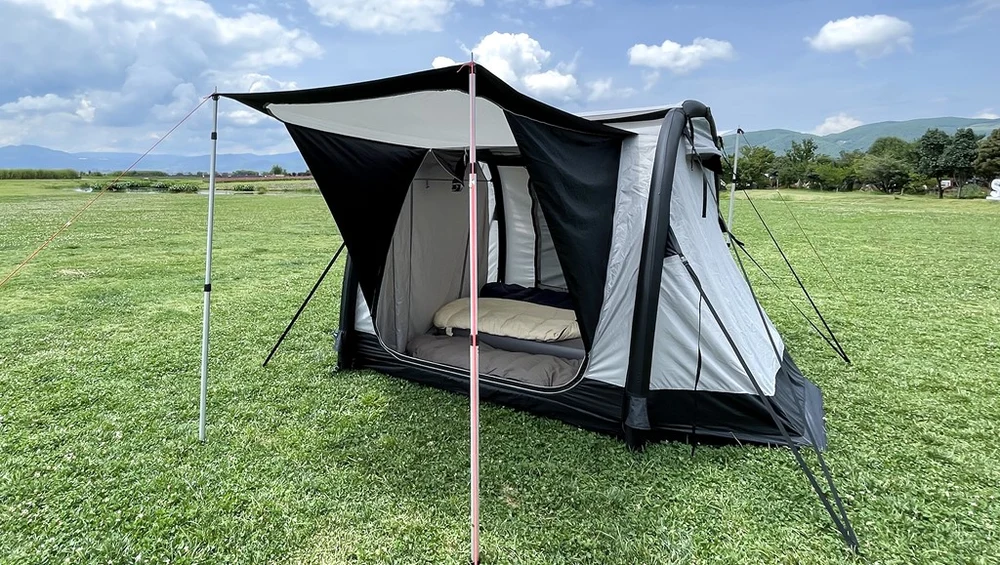
Addressing the challenge of cross-vehicle adaptability requires moving away from rigid, model-specific fitments toward flexible mechanical interfaces. Brands focused on automotive outdoor integration, such as THECATAL, have focused engineering efforts on sleeve-based connection architecture. The Boundary Series Smart Shell demonstrates how a single shelter can successfully bridge the gap between traditional gasoline vehicles and modern electric cars.
The Smart Shell uses a dedicated connection sleeve to link the tent with the vehicle, supporting compatibility with both electric and gasoline vehicles across a range of models. This design accommodates variations in tailgate dimensions and bumper heights, creating a dependable weather seal across different vehicle platforms. Built from heavy-duty silicone-coated 70D ripstop nylon, the shelter weighs approximately 26 pounds (12 kg) and provides full four-season durability.
By focusing on physical adaptability rather than proprietary latching mechanisms, this engineering approach allows campers to attach their shelter to an electric SUV or a conventional gasoline vehicle with equal reliability, eliminating the need to purchase dedicated accessories for different cars.
Defining “Smart Vehicle” Integration in Physical Gear
In modern automotive discourse, “smart integration” often refers to software connectivity, digital displays, and automated systems. For physical outdoor accessories like tailgate shelters, however, true smart integration remains fundamentally structural and mechanical. A truly intelligent shelter design anticipates how people interact with modern vehicles during extended outdoor stays.
Key physical integration requirements include:
- Thermal and Exhaust Management: Accommodating tailpipe locations on internal combustion engines while ensuring clean air separation from the interior space.
- Electrical Access: The Smart Shell connects to the rear of the vehicle through a dedicated connection tunnel and supports use with both electric and gasoline-powered vehicles.
- Weather-Sealed Elasticity: Utilizing resilient, high-tension sealing skirts that withstand repeated hatch movements without stretching, tearing, or breaking the rain seal.
- Aerodynamic Balance:Supporting the Smart Shell’s vehicle-connected configuration for different outdoor camping environments.
The physical connection system of the Smart Shell tackles these requirements by prioritizing structural resilience and ease of maintenance. Its sleeve framework maintains a tight barrier against wind and rain without requiring complex electronic sensors or motorized latches that could fail in harsh, sub-zero wilderness environments.
Practical Trade-Offs of Universal-Fit Systems
While cross-platform compatibility offers clear advantages for vehicle owners, universal-fit engineering involves practical trade-offs that buyers should weigh carefully. A flexible connection sleeve designed to fit multiple SUV profiles may require slightly more tension adjustment during setup compared to a custom-molded, single-vehicle shelter.
Campers must take time during initial deployment to cinch down tension straps and adjust seal skirts to ensure an airtight barrier around their specific vehicle hatch.
Additionally, at 26 pounds, a four-season tailgate shelter reflects a design emphasis on heavy-duty fabrics, robust zippers, and weather-resistant coatings over absolute minimalism. It is engineered specifically for vehicle-supported adventures where durability and living space take precedence over ultra-light packability.
For travelers who frequently upgrade their vehicles or manage a multi-car household, the long-term utility of a universal, cross-powertrain shelter far outweighs the extra minutes spent tuning tension straps during camp setup.
The Evolving Landscape of Tailgate Camping
As automotive technology advances, the boundary between the vehicle and the campsite will continue to blur. Electric vehicles with large battery reserves are increasingly serving as mobile power hubs, capable of running camp climate systems, induction cooktops, and auxiliary lighting for days at a time.
Tailgate shelters like THECATAL‘s Smart Shell represent an essential step in this evolution, providing the physical bridge that unites modern vehicle power with outdoor shelter needs.
Ultimately, evaluating a car tail tent comes down to practical performance metrics: structural strength, weather resistance across four seasons, setup efficiency, and adaptable vehicle mounting. By prioritizing versatile mechanical engineering over rigid model constraints, modern tailgate shelters ensure that outdoor enthusiasts can explore the backcountry comfortably, regardless of what vehicle drives them there.
