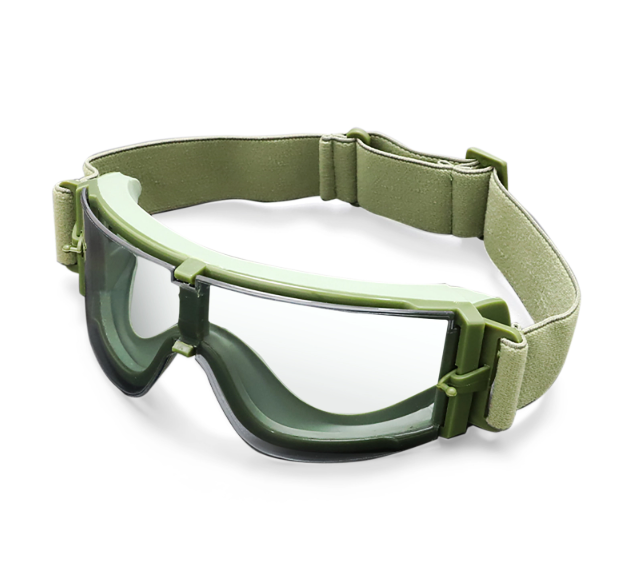
Tactical eyewear must work with the equipment worn around it. Even suitable lenses become less useful when a frame interferes with a helmet or shifts during a routine exercise. A helmet changes the space available for the frame, strap, and face seal.
For purchasing teams, selecting helmet compatible goggles means checking the complete equipment setup, not simply looking for a helmet symbol on a product page. Fit, visibility, lens protection, and replacement procedures all matter when units are ordered for training groups.
How Helmet Fit Changes Eyewear Requirements
Helmet shells, retention straps, and padding occupy different parts of the head. Goggle frames must sit near the face without pushing the helmet upward.
Strap placement deserves equal attention. Purchasers should note whether the strap can be adjusted while gloves are worn and whether the setting stays consistent after repeated use. Testing should include the actual helmet sizes and configurations used by the intended training group, rather than one demonstration sample.
Narrower faces may leave gaps near the nose or cheekbones, while wider faces may experience pressure at the temples. Multiple wearers should try the sample during ordinary movements, including kneeling, turning, and looking upward.
Compatibility should be tested with other issued equipment as well. Hearing protection, masks, and communication accessories may occupy the same space.
Lens Performance Under Changing Conditions
Clear vision depends on more than initial lens transparency. Moisture from breathing, changes in temperature, and perspiration can cause condensation. For army goggles, anti-fog performance is particularly relevant during repeated transitions between resting periods and physical activity.
Ventilation and lens construction influence moisture control, but neither removes the need for realistic testing. Teams can assess clarity after walking, stopping, and putting on other protective equipment.
Lens material is another consideration. Procurement teams should also examine whether the supplied replacement lenses match the approved sample and have clear identification. Polycarbonate is commonly selected for protective eyewear because it combines relatively low weight with impact resistance. Buyers should still request test results for the specific product and compare them with the safety requirements of the application.
UV400 describes a lens filtering claim, but it does not establish impact certification or suitability for every task. Procurement documents should separate optical requirements from impact tests, scratch resistance, and maintenance instructions.
What a Practical Product Review Includes
Product details become useful when linked to evaluation criteria. The RK5 tactical goggle uses a reinforced HD polycarbonate lens, with stated UV400, anti-fog, anti-scratch, and impact-resistant functions. Its frame combines TPR and PC materials for flexibility and structured support.
The design is presented as compatible with helmets and intended for protection against wind, dust, and debris during tactical activities. However, a compatibility statement does not identify every helmet model. Buyers should verify fit and request relevant impact testing documentation before specifying the product.
YIJIA Optical offers this model in military green, black, and khaki. For distributors, those choices can simplify range planning across different customer preferences.
Samples can be evaluated through a short trial with representative users. Record frame contact points, lens fogging, strap movement, and ease of removal.
Procurement Tests Beyond the Product Photograph
Buyers sourcing helmet compatible goggles should prepare a checklist that reflects their customers’ actual working conditions. Include helmet models, wearing duration, other protective gear, and expected weather.
For army goggles, terminology deserves careful handling. The word “ballistic” in a product description does not, by itself, prove compliance with a particular military specification. Request the applicable standard, laboratory report, test method, and model identification before making protection claims in catalogs.
Optical checks should cover distortion, scratches, and visibility at the edges of the lens. Suppliers and buyers can agree on inspection criteria, acceptable defects, and packaging methods before starting routine production.
Longer wear trials may reveal problems not visible during initial fitting. Pressure, slipping, and condensation can emerge with repeated movement. Trial reports should state the helmet arrangement and conditions used, allowing later production samples to be compared against the same reference.
Turning Field Feedback Into Purchase Specifications
A purchasing specification should describe measurable observations instead of broad phrases such as comfortable or durable. It can define the helmet models tested, target lens functions, frame color, packaging, and sample approval process. These records reduce misunderstandings during repeat orders.
Customization also needs practical boundaries. Color samples and logo artwork should be approved separately from the protective components. Buyers may request logo placement, color changes, or packaging adjustments, but changes should not be assumed to preserve the original test results. Revised samples need review whenever materials or components affecting protection and fit are changed.
YIJIA Optical supports OEM and ODM work, including branding and color customization. They can discuss sample requirements with business customers before production. Procurement teams should provide complete drawings or references, intended market requirements, and the quantity needed for evaluation.
Batch identification, agreed visual criteria, and documentation of product changes make later issues easier to investigate. Buyers should confirm which reports apply to the ordered configuration rather than relying on certificates for unrelated eyewear.
Selecting Eyewear for Real Equipment Setups
Selecting army goggles for tactical users starts with the equipment combination and the protection requirements of the activity. Helmet fit, lens clarity, anti-fog behavior, and documented testing should be considered together, not treated as separate selling points.
A repeatable evaluation process helps purchasers compare helmet compatible goggles without relying on appearance alone. Match samples with issued helmets, record user feedback, and confirm applicable test evidence. Those steps provide a clearer basis for ordering eyewear for organized training or outdoor use.
